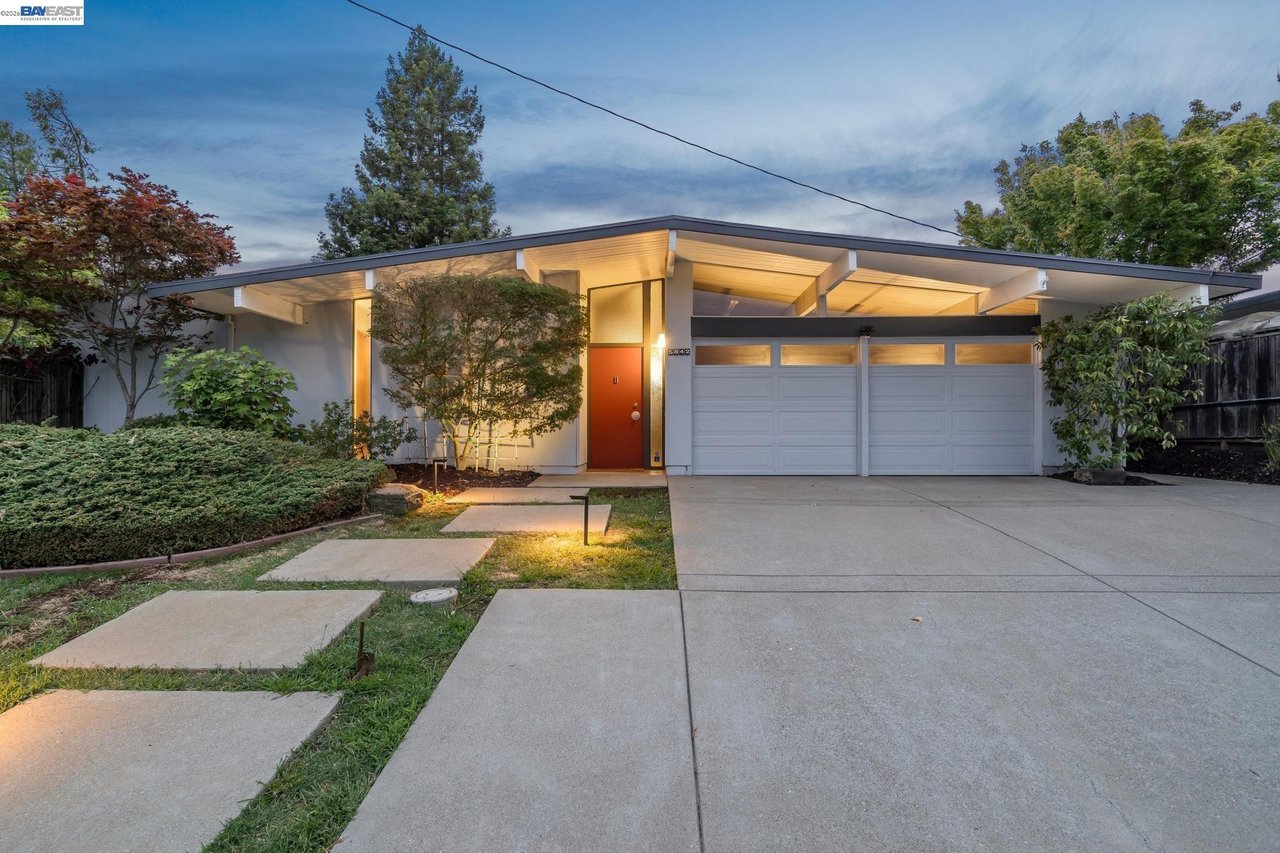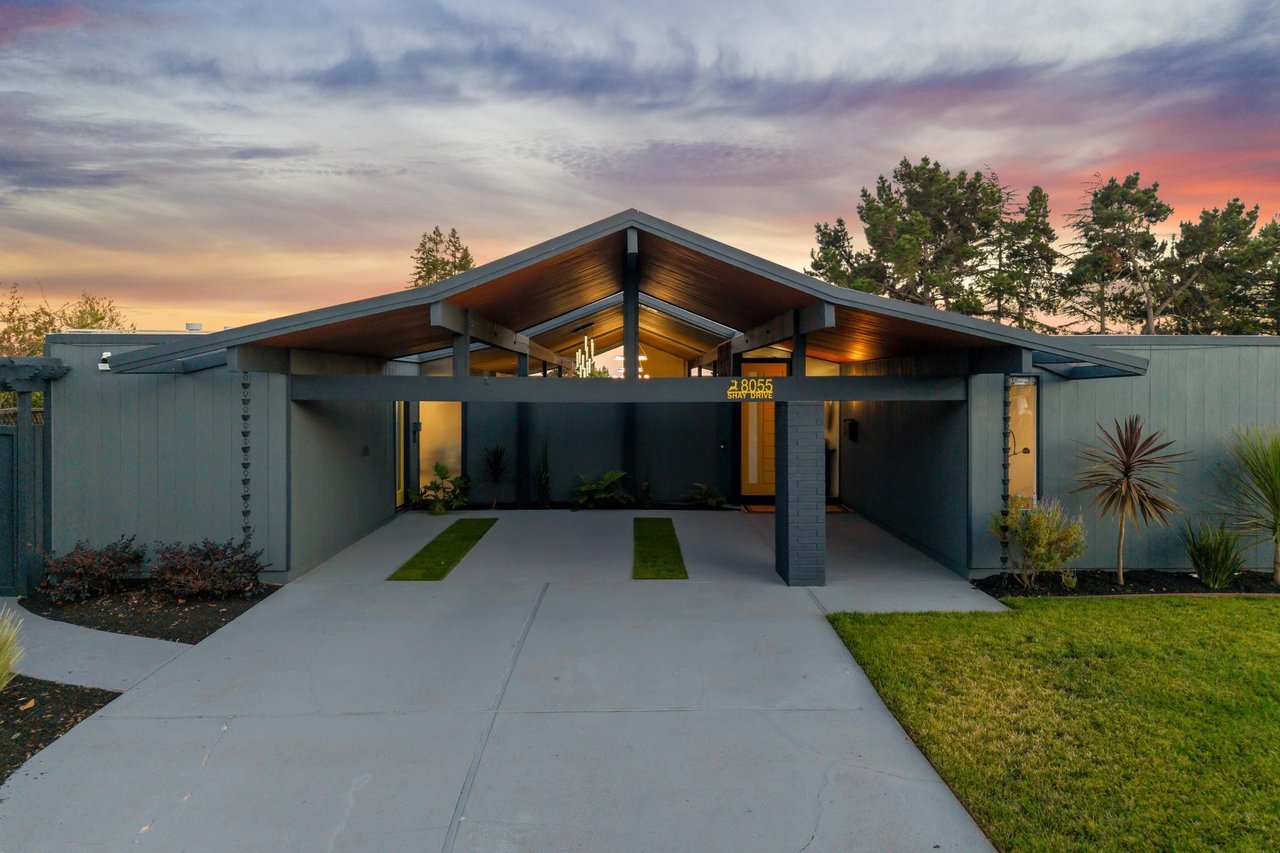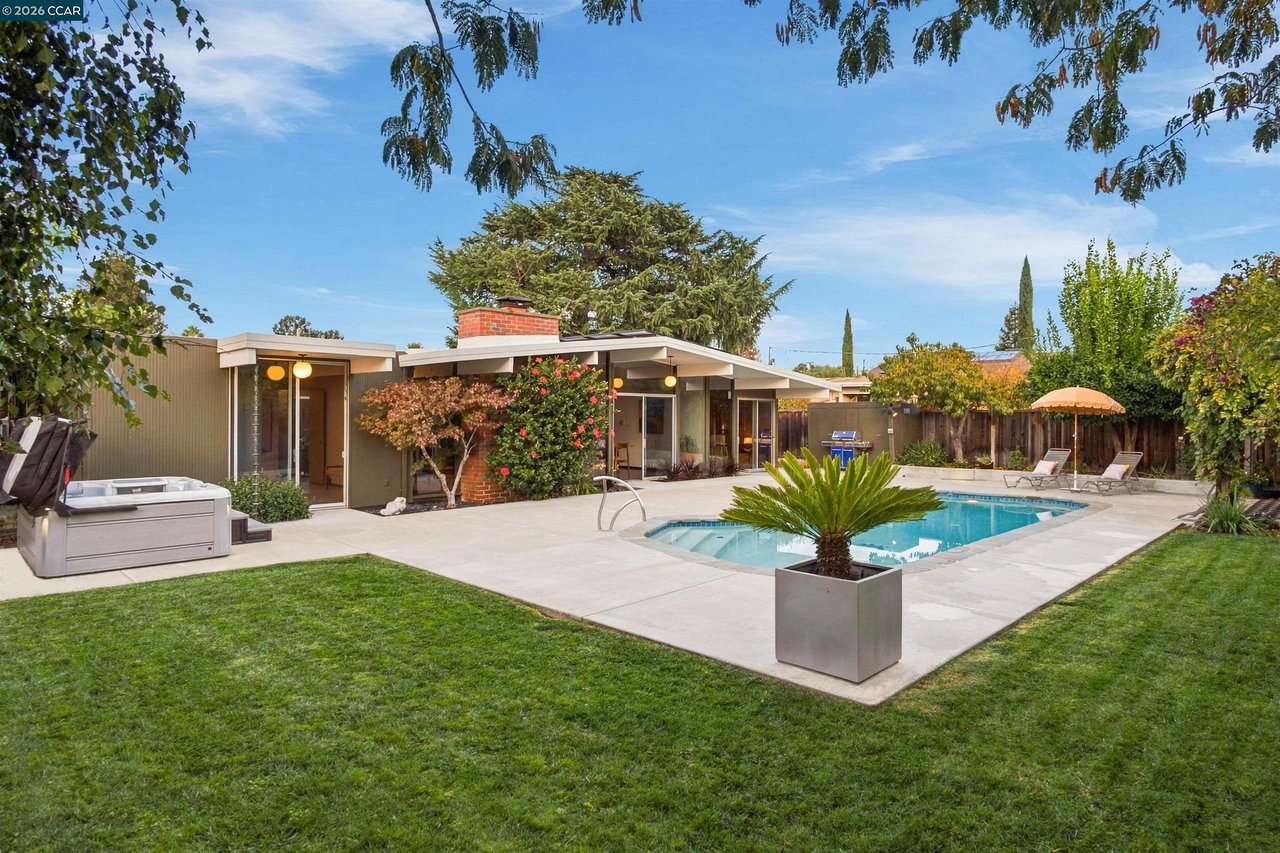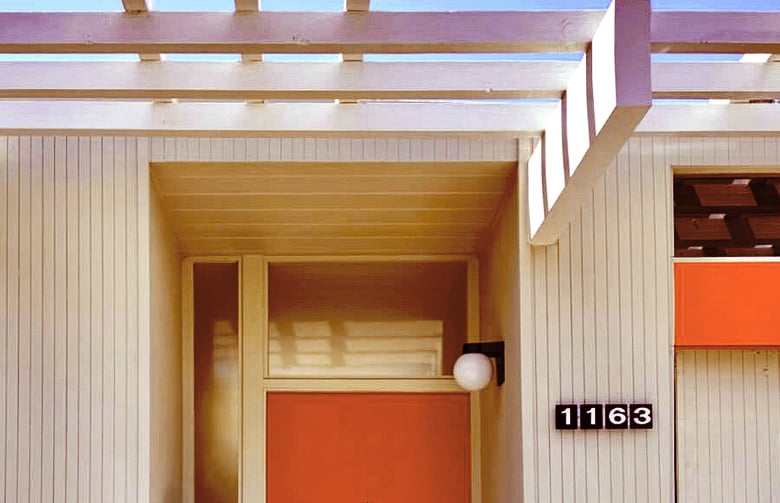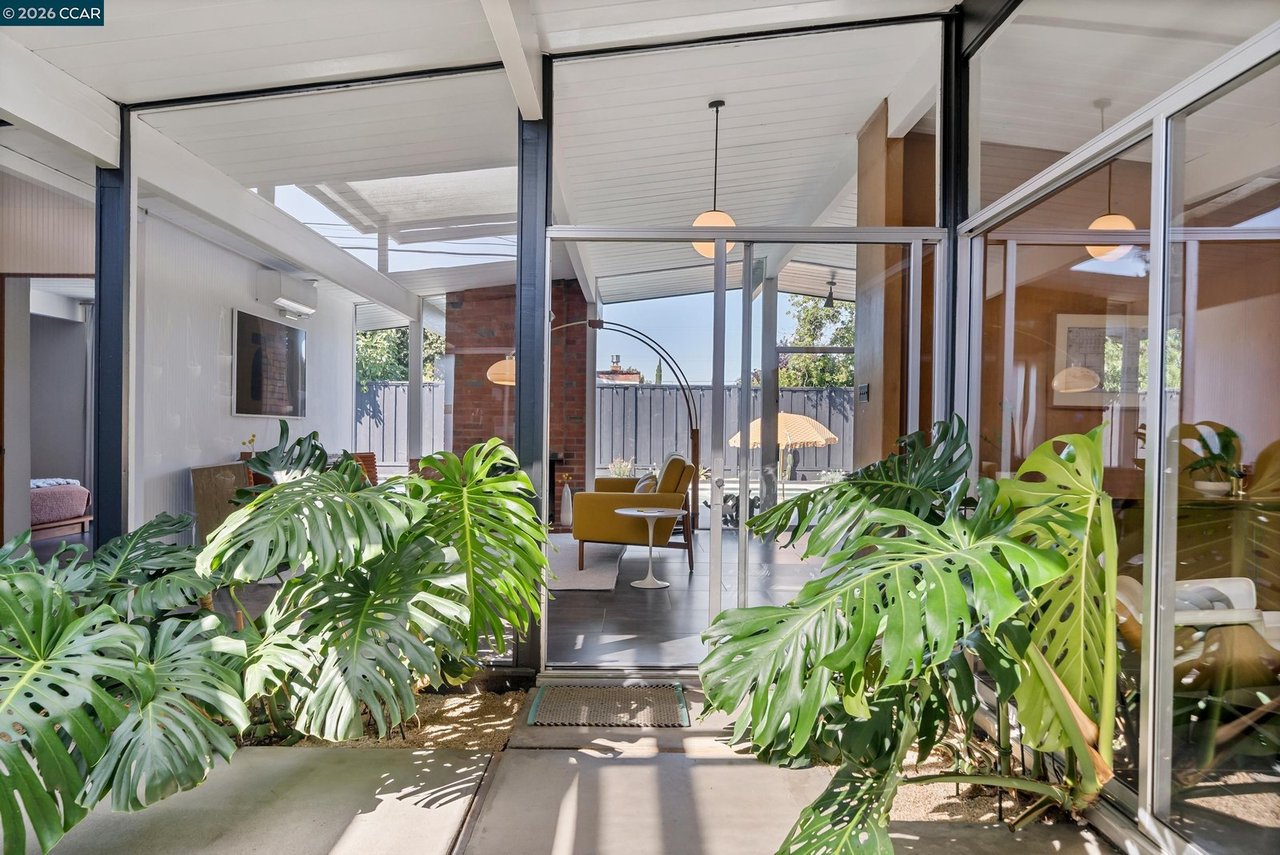
Featured photo: 4130 Wilson Ln, Rancho del Diablo, Concord. Listed by Theresa
For many people, the atrium is the room that makes an Eichler feel like an Eichler: an open court of light at the center of the plan, with glass all around it and the sky above. Not every East Bay Eichler has one, and not every atrium is still open. Owners often ask me whether to keep it open or enclose it, and buyers ask what an enclosed atrium means for the way the house lives. I live in an Eichler in Rancho San Miguel, and my background as a corporate design director makes me look at this as a plan question, not just a square-footage question.
What an Atrium Is — and What It Isn't
Robert Anshen introduced the atrium to Eichler designs in 1957. In Rancho San Miguel, that timing matters: earlier homes, built from 1955 into that shift, have flat or gently pitched roofs and may open to the garden without a central court. In Concord, many mid-1960s plans are organized around an atrium, but not all of them. Rancho del Diablo has a documented flat-roof model with no atrium, alongside pitched-roof and carport atrium plans. Later Walnut Creek work includes gallery and H-plan layouts as well as atriums. "Super Eichler" is an informal description of certain later, larger homes, not a promise that the house has an open court.
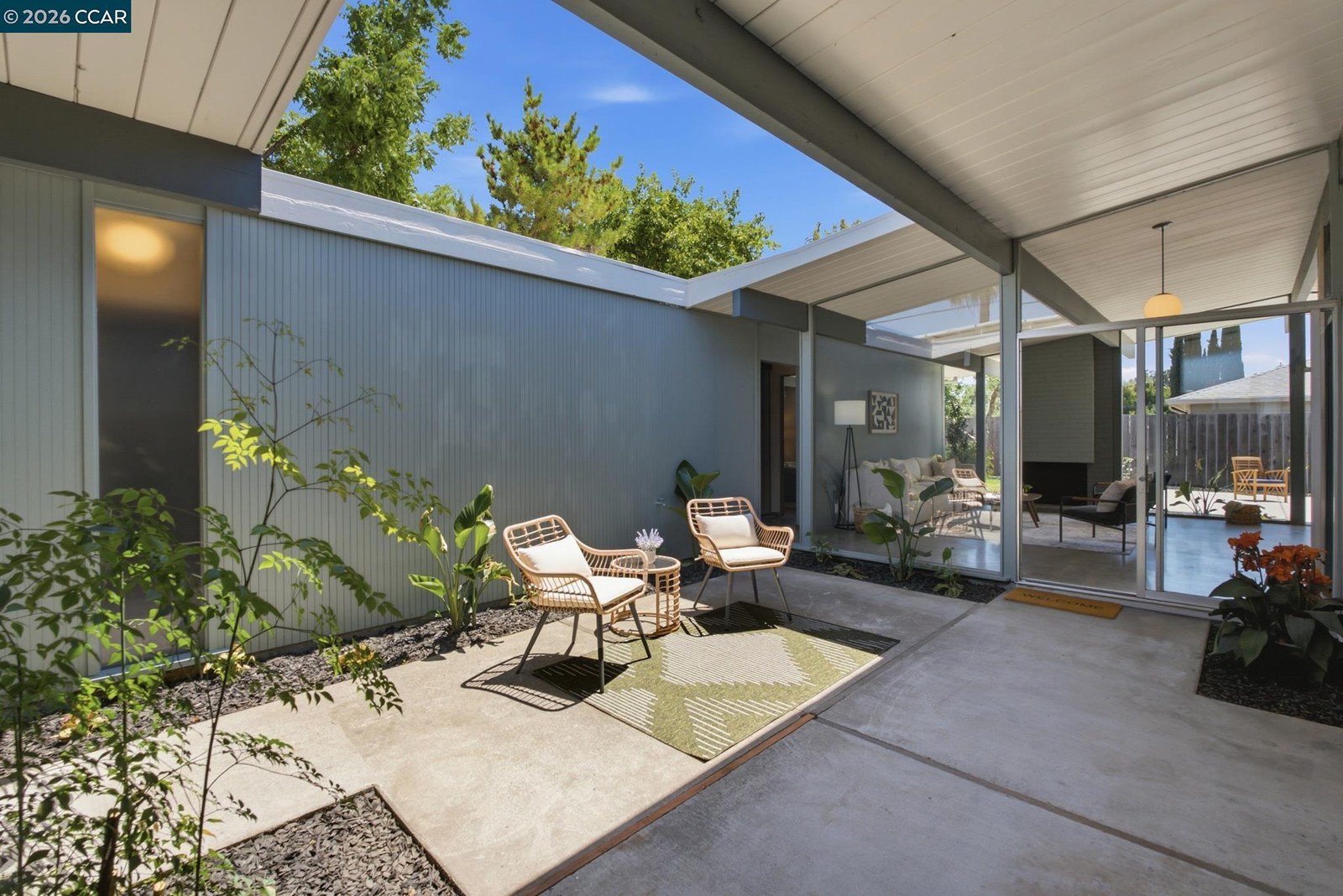
An open atrium is not a conventional room and not quite a backyard. It's a transitional space: light reaches the middle of the house, living areas and bedrooms can look onto a private court, and circulation often passes around it rather than through a dark hall. When it works, you feel the structure, the glass and the weather as part of daily life.
Open Atriums I See in the East Bay
The best examples are specific houses, not a type in the abstract:
- At 4024 Salem Street in Rancho de los Santos, a Claude Oakland design is entered through an atrium Zen garden. I sold the home in May 2026.
- At 3998 Salem Street, a CC-294R kept its central atrium intact, along with mahogany paneling and globe lighting, through 60 years with the original owners. Sold August 2026.
- In Parkwood Estates, 3701 Gainsborough Drive is an atrium model that still had original mahogany, ceilings and built-ins when I sold it in October 2026. 3713 Merridan Drive, a CC-174R, pairs an atrium with radiant floor heat. Sold May 2026.
- In the Pazzi and Valley Vista pocket, Dwell has described 3601 Valley Vista Road as a 1971 Claude Oakland home with a central open-sky atrium. A public listing for 413 Pazzi Road records an atrium with a retractable roof — a documented example of a flexible covering, not a complete roster of what every house in the enclave has.
Most of the Sequoyah Hills Eichlers I've represented are also built around a central atrium, including an open-air atrium entry on the Double-A my buyers purchased at 8077 Shay Drive. The plan, not the nickname, tells you how the light actually works.
The Case for Keeping It Open
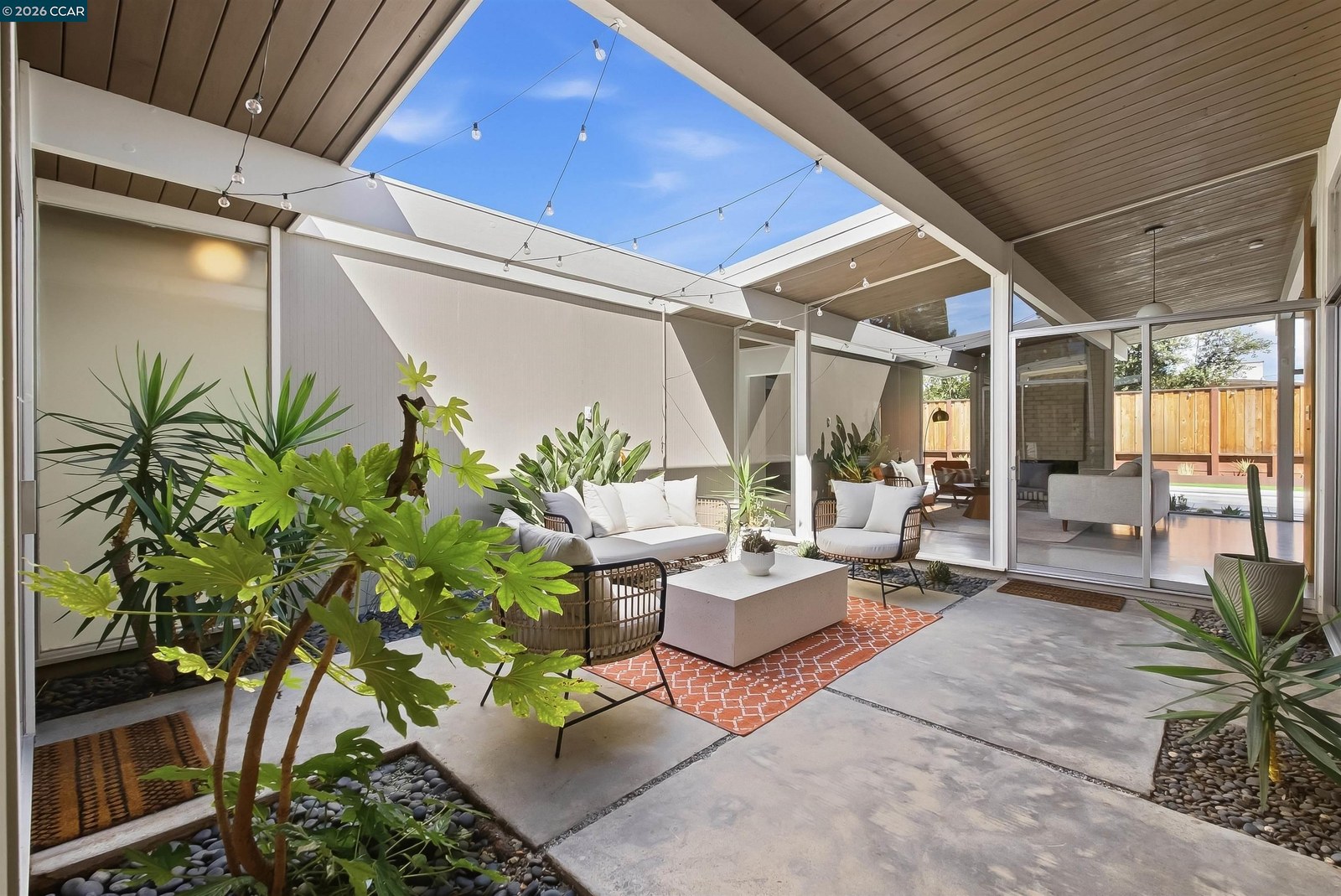
Eichler buyers are often shopping for that indoor-outdoor connection. An open atrium, in good working order, is one of the clearest ways to show it. Keeping it open means taking care of the things that make the space livable: drains and overflow paths, waterproofing where glass meets the slab and the walls, the condition of the surrounding roofs, and plantings that don't trap moisture against the house. Leaves, standing water and failed flashing are practical problems, not arguments against the original plan.
I also look at how you move through the house. The atrium should still feel like the heart of the plan, not a leftover courtyard you hurry past. Furniture, lighting at the glass and a simple planting scheme usually help more than a heavy structure overhead.
If You're Thinking About Enclosing It
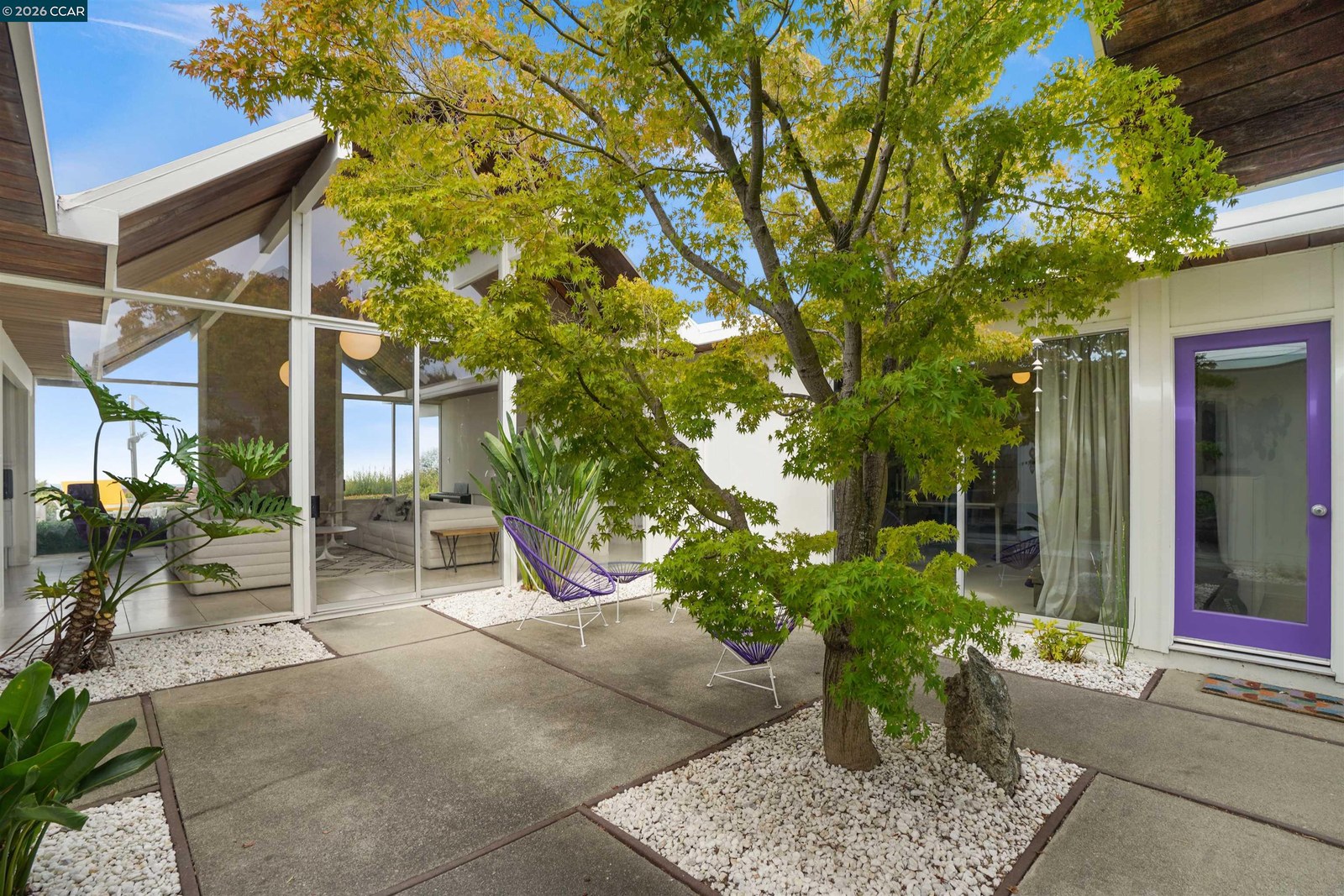
People enclose atriums for understandable reasons: rain, heat, insects, a desire for more interior floor area, or a previous owner's unfinished project. I don't tell every owner they must never cover the court. I do ask them to look hard at what they would be changing.
A full enclosure turns a transitional space into a room. That can add usable area, but it also changes the light in the surrounding spaces, the way air moves, and how the house is described on paper. Live tract guides already warn buyers to ask how enclosed outdoor spaces are documented, and to compare like with like rather than trusting a headline square-footage figure. In Concord, enclosed atriums and room conversions should have permits on file with the City of Concord; in Walnut Creek, additions and conversions should be permitted with the city there. The same permit logic applies in Oakland and in the counties, as I note below.
Heating and comfort have to be designed, not assumed. Original radiant heat warms the interior slabs of the house. An open atrium was outdoor space, so enclosing it usually means thinking about heat, cooling, glass and ventilation as a new condition, not as a room that already behaves like the living room. Drainage doesn't go away when you add a roof: water still has to leave the new plane and the remaining court, if any.
Quality varies widely. A well-detailed glass enclosure or a generous skylight can keep some of the outdoor character. A solid roof with little daylight, or a prefabricated sunroom that fights the post-and-beam framing, can make the middle of the house feel smaller and darker. A retractable roof, as documented on the Pazzi Road example above, is another approach; it still needs to be understood as a specific assembly, with permits and a maintenance plan, not as a shortcut around design.
My test is the same one I use on kitchens and other alterations: does the change work with the structure, the daylight and the circulation, or does it simply add another finished room? If you're updating the kitchen that looks onto the atrium, my post on kitchen design trends in East Bay homes is a useful companion. Warm wood and a careful layout should support the light the atrium already gives you.
Resale, Without Invented Numbers
I wouldn't put a percentage on what an open or enclosed atrium "adds" or "subtracts." What I can say, from selling these houses, is that many Eichler buyers come looking for an open court, and that a clumsy enclosure is one of the first things they try to read through. A thoughtful, permitted enclosure should be explained honestly: what was done, when, with what permits, and how the rooms now work. If you're preparing to sell, start with my guide to selling an Eichler and a home valuation. We'll talk about the actual plan, not a slogan.
Permits and Local Rules
Enclosing an atrium, adding a roof or substantially changing the glazing is the kind of work that typically needs a permit. Local rules are set by the jurisdiction that actually governs the house: the City of Concord, the City of Walnut Creek, the City of Oakland, Contra Costa County, or Alameda County for Greenridge in unincorporated Castro Valley. Don't copy a neighbor's solution and assume it was approved, or that the same details will be accepted on your lot.
Association review, if any, is a separate step. In Sequoyah Hills, the homeowners association reviews exterior changes, and Oakland design review also applies. Rancho San Miguel has a voluntary association. Rancho de los Santos and Rancho del Diablo have no HOA. For Parkwood Estates, later Walnut Creek neighborhoods and Greenridge, confirm any association or recorded restrictions on title and disclosures.
Eichler Atriums FAQ
Do all Eichlers have an atrium?
No. Many mid-1960s Concord and Oakland plans do, but Rancho del Diablo has a documented flat-roof model without one, earlier Rancho San Miguel homes predate the 1957 atrium, and later Walnut Creek work includes gallery and H-plan layouts as well as atriums.
Will enclosing the atrium increase the value of my house?
Not automatically, and not by a figure I would invent. Some buyers want more enclosed area; many Eichler buyers want the open court. The quality of the work, the permits, and how the light and circulation still function matter more than the fact of a roof overhead.
What should I maintain if I keep it open?
Drains and overflow, flashing and sealants at the glass, the surrounding roof, and plantings that don't hold water against the structure. Have those items inspected by people who know Eichlers, especially before you sell or before you buy.
Do I need a permit to enclose an atrium?
In most cases, yes. Ask the City of Concord, the City of Walnut Creek, the City of Oakland, Contra Costa County or Alameda County, whichever applies, and check any association review before work starts.
Let's Talk About Your Eichler
If you're deciding what to do with an atrium, or you want to understand how buyers will see it, contact me. I'm the #1 East Bay Eichler Realtor by sales volume (2026) and the #1 Concord Eichler Realtor by sales volume (2025 & 2026). I have Top 3 Concord Eichler highest solds. I live in an Eichler in Rancho San Miguel, previously served on the RSMA Board, and I'm an Eichler Network East Bay Realtor. You can also start with the East Bay Eichler guide or a home valuation.