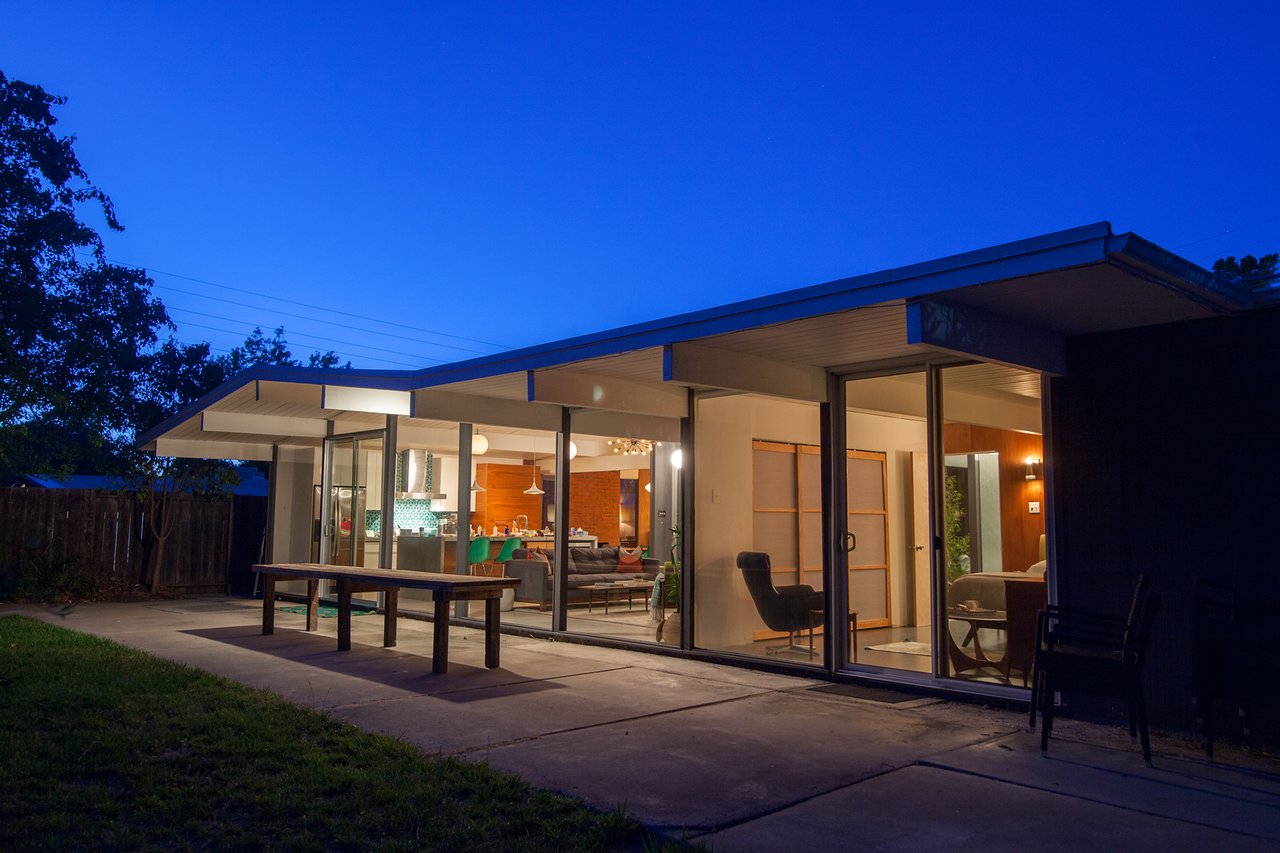
Featured photo: Destination Eichler
If you're trying to understand what an Eichler home is, or where to find Eichler homes in the East Bay, it helps to start with a simple fact: these are not generic mid-century ranches. An Eichler is a house Joseph Eichler developed, with a recognizable architectural language — post-and-beam structure, walls of glass, indoor-outdoor rooms — that shows up differently in each neighborhood. In the East Bay, that work is concentrated in eight distinct groupings in Concord, Walnut Creek, Oakland and unincorporated Castro Valley.
I live in an Eichler in Walnut Creek's Rancho San Miguel, previously served on the Rancho San Miguel Association board, and work as an Eichler Network East Bay Realtor. This guide is the overview: what makes a home an Eichler, who designed the East Bay neighborhoods, where they are, and what I'd want you to know before you buy or sell. For a closer look at Concord and Walnut Creek, start with my guide to Eichler neighborhoods in Concord and Walnut Creek. Each tract also has its own full guide, linked below.
What Makes a Home an Eichler?
Joseph Eichler was the developer, not the architect. He hired well-known modern firms to design both the site plans and the houses, then built them as tract homes. The result is a family of related designs rather than a single model.
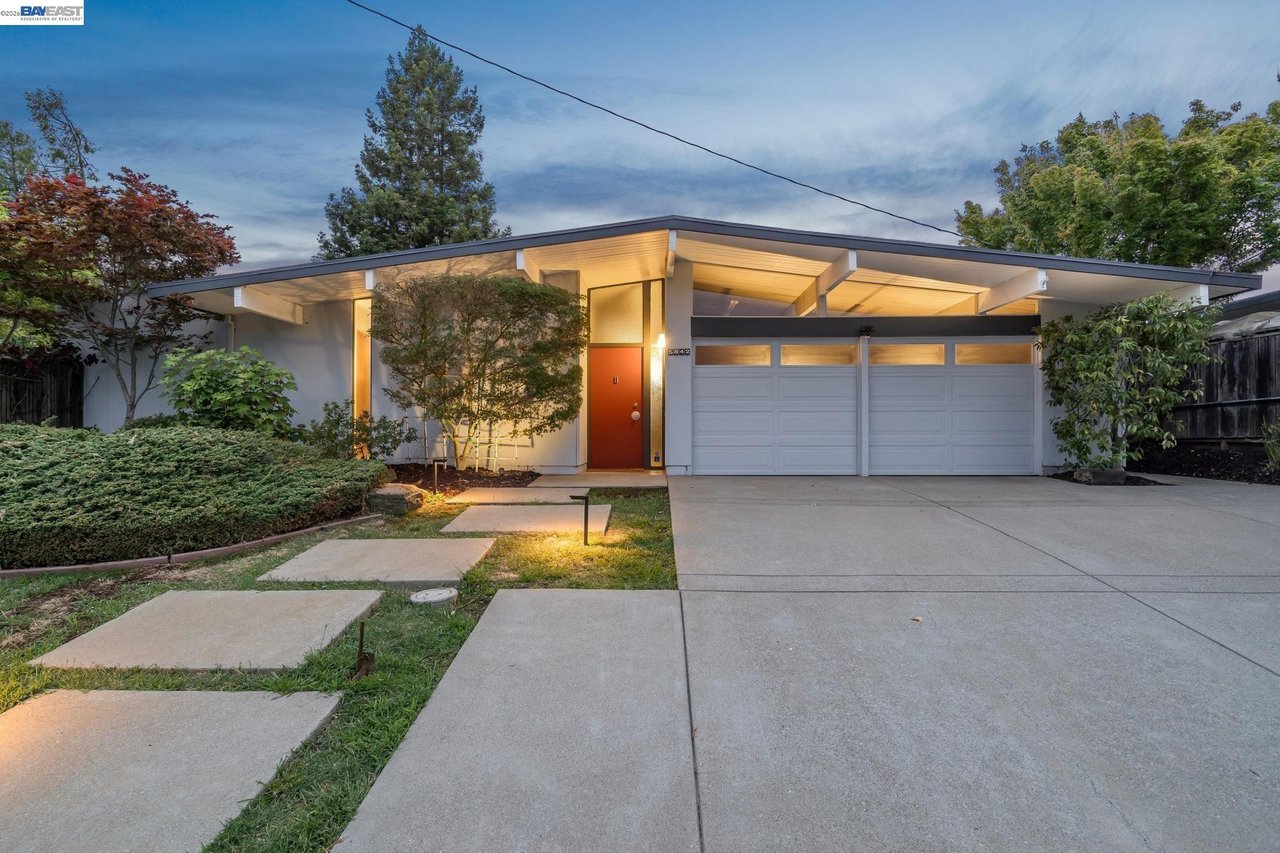
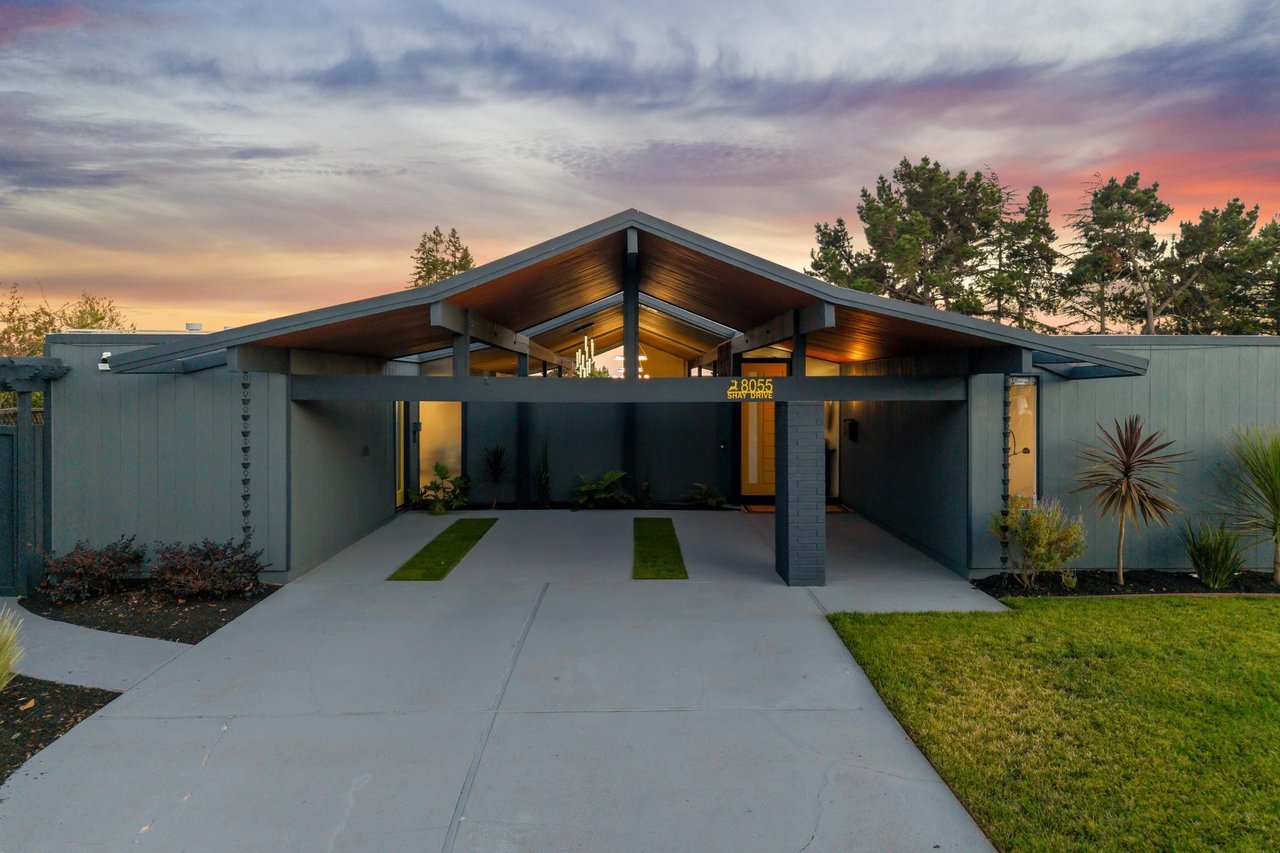
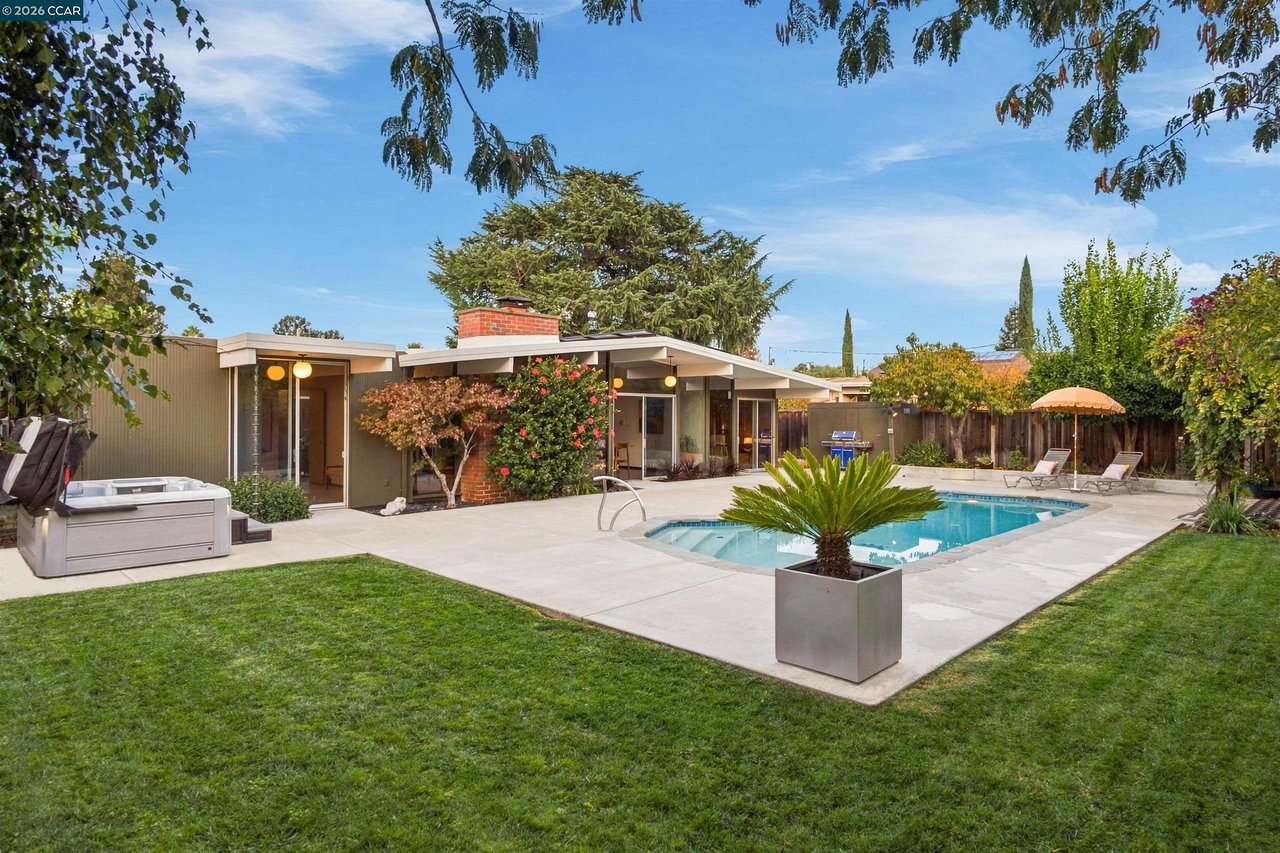
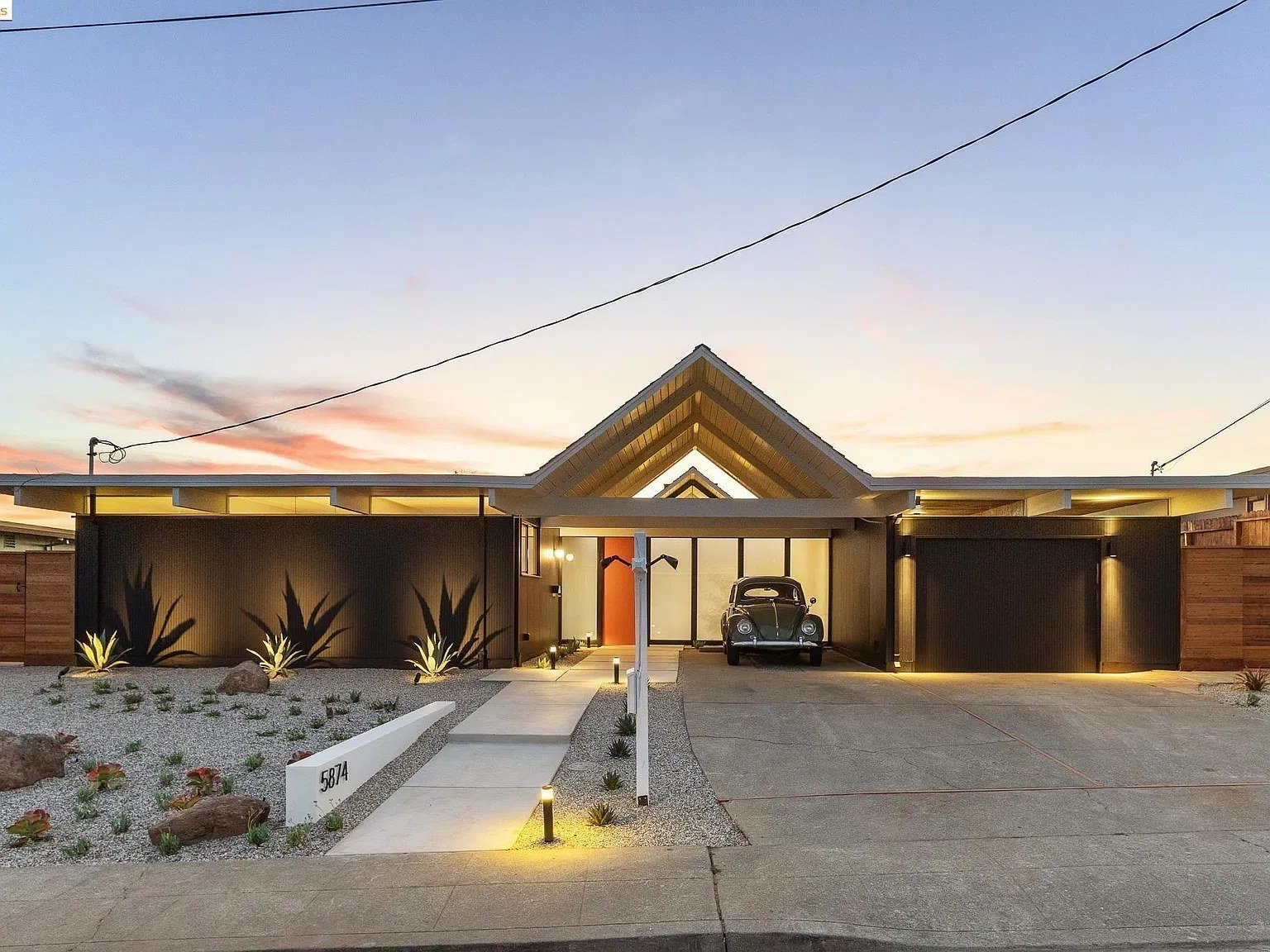
The East Bay houses share a vocabulary you can still walk through today. Post-and-beam framing and tongue-and-groove ceilings keep the structure visible. Walls of glass and sliding doors open living spaces to a garden, atrium or courtyard. Many plans are organized around a central atrium, so you step outdoors before you're fully inside; earlier homes may have a more compact courtyard or a later atrium added mid-stream. Radiant heat in a concrete slab, mahogany paneling, clerestory windows and globe lighting show up often, though not every house still has its originals. Some later plans use a gallery or an H-shaped layout instead of a classic atrium, and some Concord and Castro Valley models have carports rather than two-car garages.
A mid-century look or a dramatic roof is not enough on its own. Later construction doesn't automatically make a house an imitation — some of Walnut Creek's later homes are part of Joseph Eichler's continuing building program — but a marketing label such as "Northgate" or "Super Eichler" isn't a substitute for the address, the original plan and the property records.
A Short History, and Who Designed Them
Eichler's first major East Bay project was Rancho San Miguel in Walnut Creek. He presented the plan in November 1954, and homes were built from 1955 to 1958. The architects were Anshen & Allen and Jones & Emmons. Because construction spanned those years, earlier homes have flat or gently pitched roofs, and the atrium, which Robert Anshen introduced in 1957, shows up in later plans.
He returned to the East Bay in the 1960s. In Concord, he built three tracts between 1963 and 1965. In unincorporated Castro Valley, Greenridge took shape in the early to mid-1960s, and in Oakland, Sequoyah Hills followed in the mid-1960s, with homes I've represented there built in 1965. By then, Claude Oakland — sometimes working with Kinji Imada, and often alongside or in addition to Jones & Emmons — was central to the design work. Many Concord plans carry "CC" model numbers; a Jones & Emmons carport model in Rancho del Diablo is documented as Plan OJ-1184.
A later chapter is easy to miss. After the original company's mid-1960s financial collapse — historical sources differ on whether to date the bankruptcy to 1966 or 1967 — Joseph Eichler continued through successor companies, including J. L. Eichler Associates, Inc. Walnut Grove, commonly called the Northgate Eichlers, and the smaller Pazzi Road and Valley Vista Road pocket near Boundary Oak belong to that later program. Claude Oakland & Associates designed Walnut Grove, and documented examples near Boundary Oak date to 1971. A later date doesn't make these homes lookalikes.
Where to Find Eichler Homes in the East Bay
There are eight documented Eichler neighborhoods in these East Bay cities: three in Concord, three in Walnut Creek, one in Oakland and one in unincorporated Castro Valley. Published home counts don't all use the same wording, and they aren't a new house-by-house census, so I give each tract's figures as they appear in the individual guides rather than adding them into a new official total.
Neighborhood | City | Approx. homes | Years built |
|---|---|---|---|
Concord | 77 Eichlers (Eichler Network); some ranch homes mixed in | 1964 on homes I've sold; part of Concord's 1963–1965 group | |
Concord | 69 (Eichler Network and Eichler Vault); about 70 in the tract guide | 1963 and 1964 | |
Concord | 41 | 1965 | |
Walnut Creek | About 375 of 535 (Eichler Network); "more than 350" per the association | Proposed 1954; built 1955–1958 | |
Walnut Creek | 34 completed | Late 1960s into the early-to-mid-1970s | |
Walnut Creek | Seven reported (Eichler Network) | Documented examples date to 1971 | |
Oakland | 48 (homeowners association); 53 to 54 (Eichler Network) | Mid-1960s; homes I've represented were built in 1965 | |
Unincorporated Castro Valley | About 185 (Eichler Network) | Early to mid-1960s |
For streets, models and recent sales, use the tract pages. Not every home on every named street is an Eichler, and later additions can change the size and layout you see today. Concord and Walnut Creek are compared in more detail in the Concord and Walnut Creek roundup.
Parkwood Estates, Concord
Concord's largest Eichler tract, with 77 Eichlers according to the Eichler Network and a few conventional ranch homes mixed in. Most are Claude Oakland designs, with Jones & Emmons credited as well. Homes and lots run a little larger than in the city's other Eichler tracts, and Gainsborough, Merridan, Lancashire and Barrington Drives form a self-contained enclave next to Concord Community Park. Read the Parkwood Estates guide.
Rancho del Diablo, Concord
A compact neighborhood of about 70 homes — 69, according to the Eichler Network and Eichler Vault — on Phoenix Street, Sacramento Street and Wilson Lane. Homes were built in 1963 and 1964. Claude Oakland is credited with the pitched-roof atrium model, and Jones & Emmons with other plans, including Plan OJ-1184. There are three basic floor plans. Read the Rancho del Diablo guide.
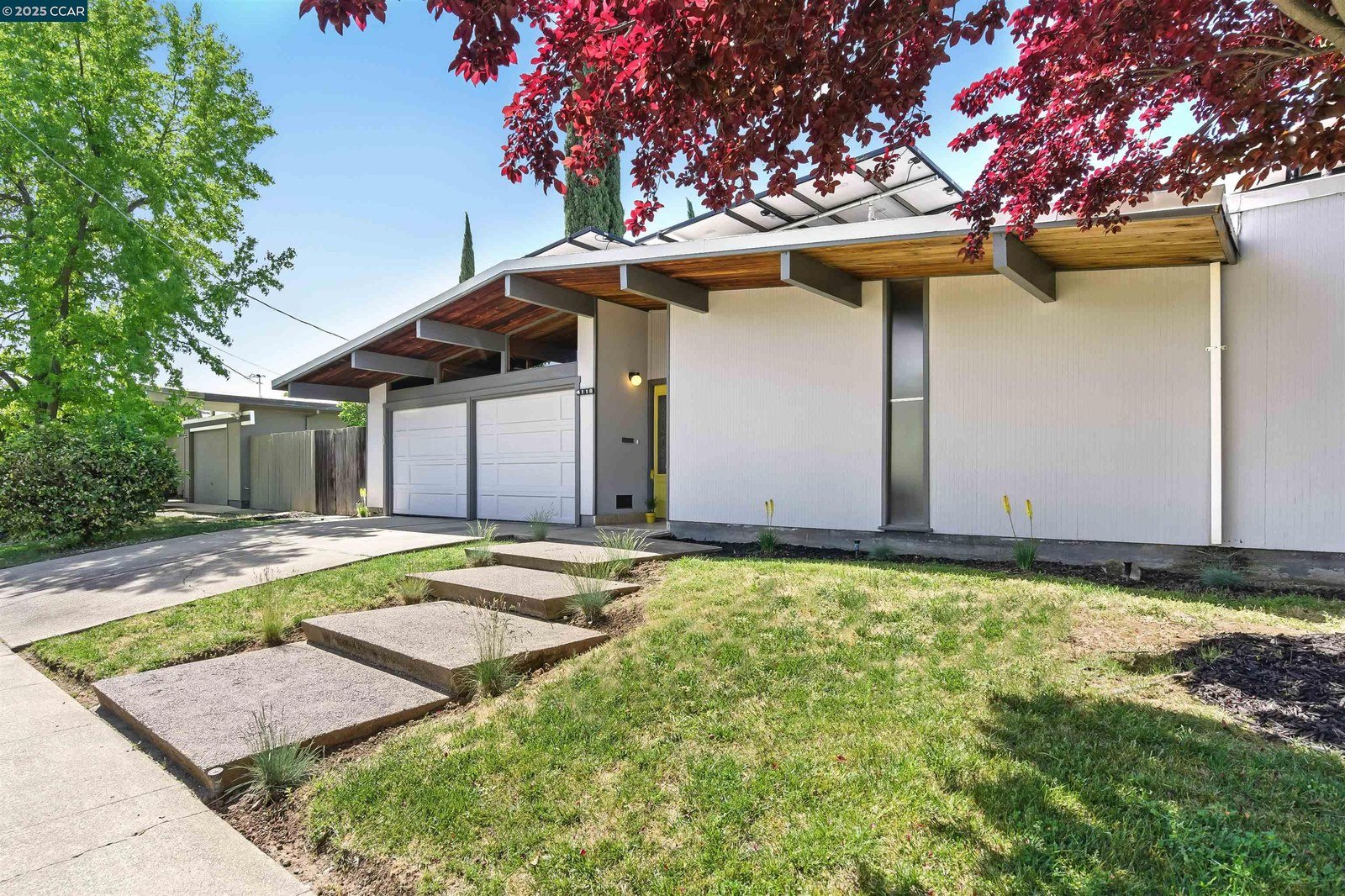
Rancho de los Santos, Concord
The last and smallest of Concord's three tracts: 41 homes, built in 1965. UC Berkeley's archives list it as Subdivision 3142, also called "Rancho del Diablo #2," with Claude Oakland "CC" plans. It's a contained pocket on West Street, Salem Street, Santa Fe Court and Houston Court, a few blocks from Rancho del Diablo. Read the Rancho de los Santos guide.
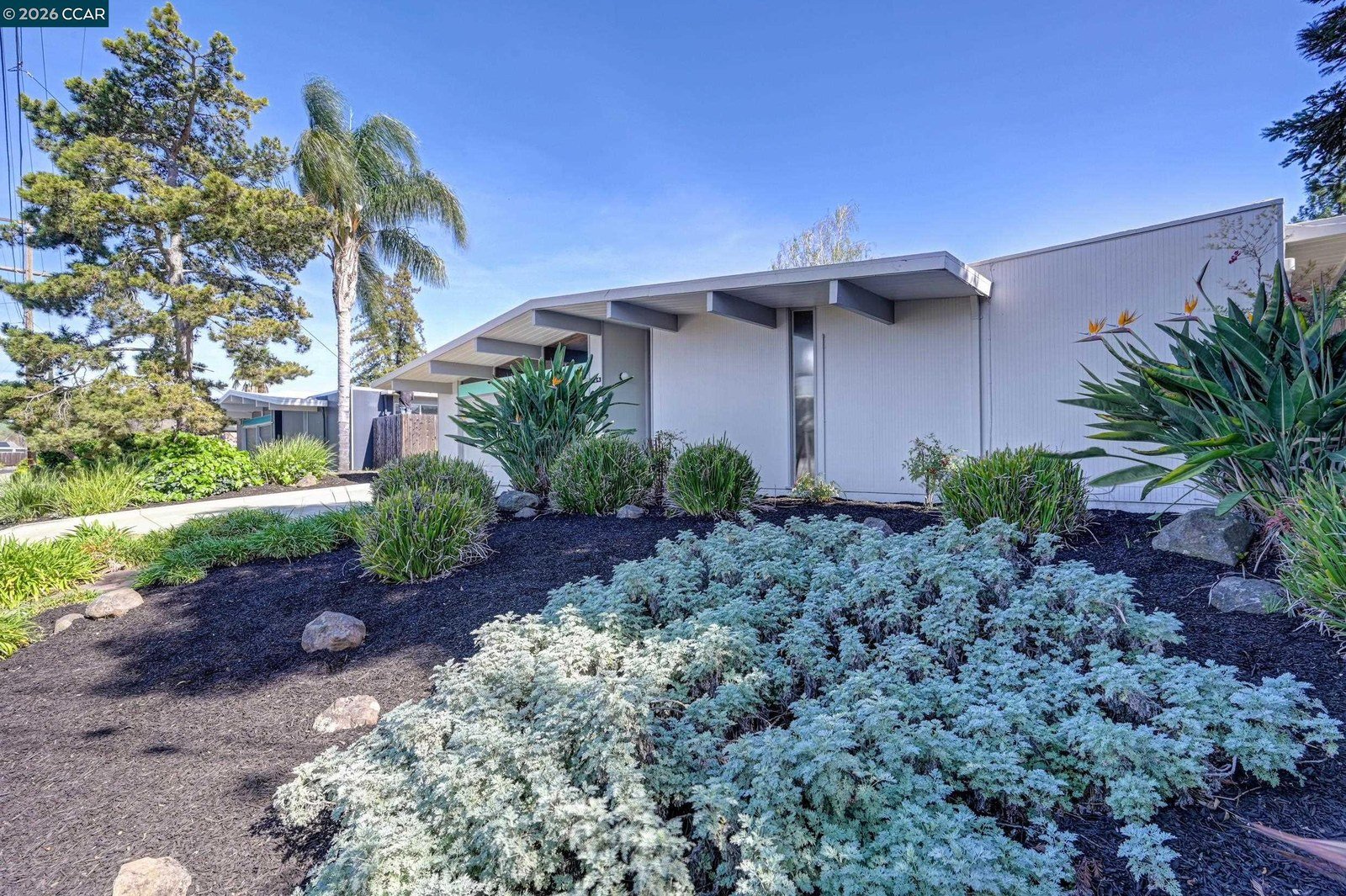
Rancho San Miguel, Walnut Creek
Joseph Eichler's first major East Bay project, and still the largest Eichler neighborhood in the region. About 375 of 535 homes are Eichlers, according to the Eichler Network; the association's history says "more than 350." Anshen & Allen and Jones & Emmons designed the houses. The neighborhood has a voluntary association, founded in 1956, and a separate swim club. This one is personal: I own a home here. Read the Rancho San Miguel guide.
Walnut Grove, the Northgate Eichlers
A later, separate Walnut Creek neighborhood of 34 completed homes, dating broadly from the late 1960s into the early-to-mid-1970s. Claude Oakland designed them for J. L. Eichler Associates. The original brochure offered larger homes of roughly 2,305 to 2,500 square feet, and Destination Eichler documents double-gable, gallery-style and H-plan layouts. "Super Eichler" is a useful description, not one official model name. Read the Walnut Grove / Northgate guide.
Pazzi Road and Valley Vista Road, near Boundary Oak
A much smaller late pocket, distinct from Walnut Grove, even though both may be marketed as Northgate or Super Eichlers. The Eichler Network describes seven late Eichler homes here. "Super Seven" is a broker nickname, not an official tract name. Documented examples date to 1971, including Claude Oakland's work. Read the Pazzi and Valley Vista guide.
Sequoyah Hills, Oakland
Joseph Eichler's only Oakland development, on a plateau off Keller Avenue in the Oakland Hills. The homeowners association counts 48 Eichlers; the Eichler Network has reported 53 to 54. Claude Oakland arranged the homes on their lots and designed many of them; Jones & Emmons designed others, including the Double Gable. The soaring Double-A model, with a pair of A-frame rooflines, is one of the neighborhood's best-known designs. The Eichlers stand among a much larger non-Eichler neighborhood, and an active homeowners association reviews exterior changes. Read the Sequoyah Hills guide.
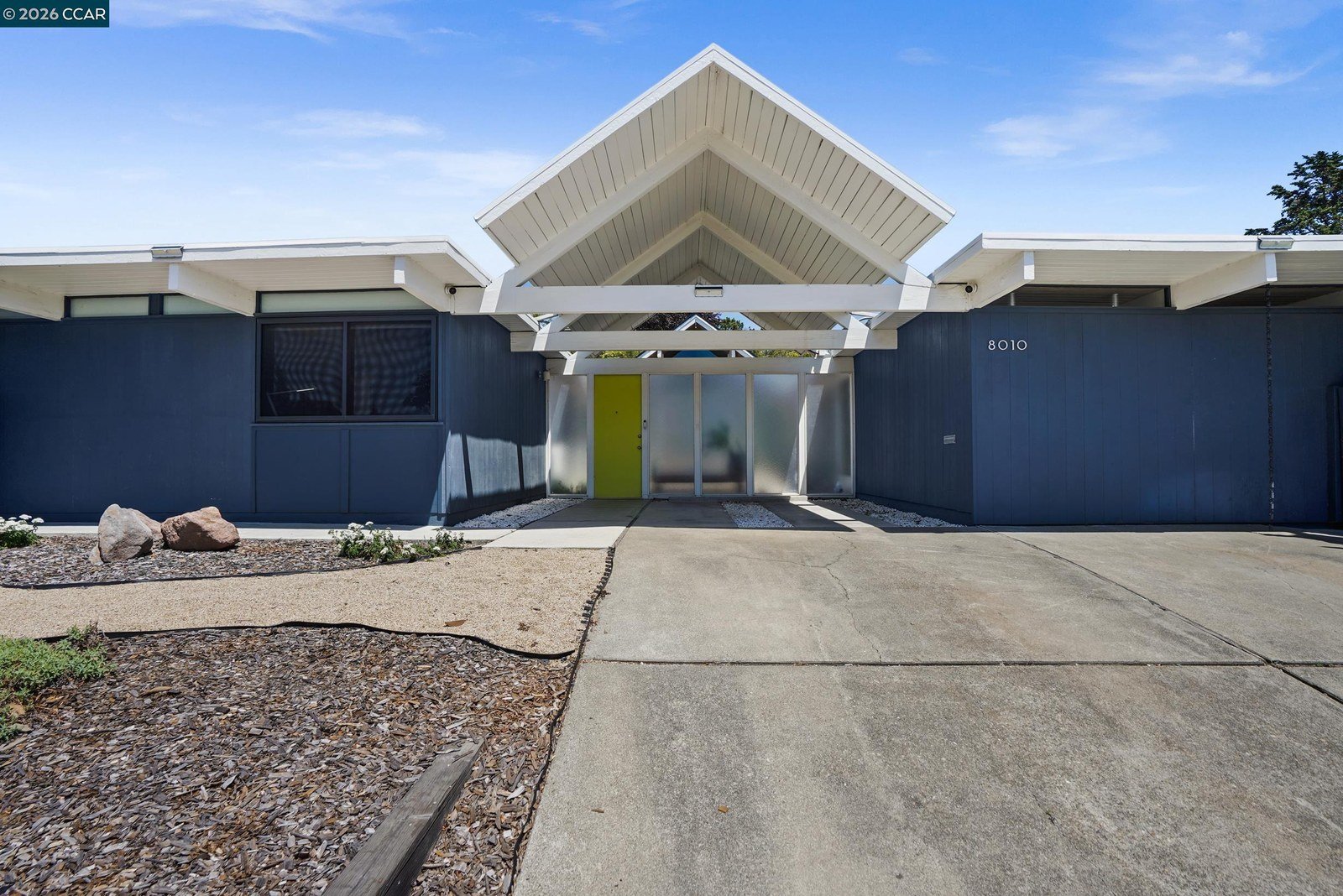
Greenridge, Castro Valley
About 185 Eichlers, according to the Eichler Network, follow a ridge in unincorporated Castro Valley, with plans by Jones & Emmons and Claude Oakland. The completed neighborhood was smaller than an earlier ambition, and some lots later received non-Eichler houses, so a Greenridge address doesn't by itself prove a house was built by Eichler. The ridge setting and varied rooflines — including flat-roof, pitched-atrium and Double-A plans — make this a different kind of East Bay Eichler landscape. Read the Greenridge guide.
What to Know Before You Buy
An Eichler search in the East Bay is really a search among neighborhoods and plans, not a single inventory. I'd start with the tract and the model, then confirm the individual house.
- Confirm it's an Eichler. Check the address, original plan and property records. Neighborhood marketing, a construction year or a dramatic roof isn't enough on its own.
- Know the plan. A CC-174, a Double-A, a gallery plan and a flat-roof, non-atrium model live very differently. Ceiling height, atrium placement, garage or carport, and how rooms connect all follow from the plan.
- Inspect the systems that matter. Radiant heat, roofing and drainage, electrical panels, glazing and, on hillside lots, grading and retaining work deserve an inspector who knows Eichlers.
- Value originality, and check permits. Intact mahogany, unpainted ceilings and an open atrium are hard to replace. Ask how additions, enclosed atriums and converted rooms are documented.
- Read the documents. Association rules, dues and design review vary by neighborhood. Rancho San Miguel's association is voluntary; Sequoyah Hills has an active association that reviews exterior changes. For Parkwood Estates, HOA status isn't consistently reported, so confirm it on the title report and seller disclosures. Rancho de los Santos and Rancho del Diablo have no homeowners association. Don't infer restrictions, or the absence of them, from a listing alone.
Have financing lined up, and tell me what you're looking for, so you hear about homes as they're coming. You can also browse my listings and recent sales.
What to Know Before You Sell
Eichler buyers are shopping for architecture, light and authenticity. The photography, pricing and preparation have to show the plan, not just a freshly painted interior. Pricing should follow the particular house — its tract, plan, condition, documented alterations and lot — rather than a generic neighborhood average.
My background as a corporate design director shapes how I look at preparation: does a change work with the structure, daylight and circulation, or does it interrupt what makes the house an Eichler? If you're thinking about selling, start with a home valuation, and I'll walk you through what buyers in these neighborhoods are paying attention to right now.
East Bay Eichler Homes FAQ
What is an Eichler home?
An Eichler is a mid-century modern house developed by Joseph Eichler, typically with post-and-beam construction, walls of glass, a close connection to the outdoors and, in many plans, a central atrium. He hired architects such as Anshen & Allen, Jones & Emmons and Claude Oakland to design the houses. A mid-century style alone doesn't make a house an Eichler.
How many Eichler neighborhoods are in the East Bay?
This guide covers eight documented neighborhoods: Parkwood Estates, Rancho del Diablo and Rancho de los Santos in Concord; Rancho San Miguel, Walnut Grove and the Pazzi and Valley Vista pocket in Walnut Creek; Sequoyah Hills in Oakland; and Greenridge in unincorporated Castro Valley. Marin and San Francisco have their own Eichler work, and they are outside this East Bay overview.
How many Eichlers are there in Walnut Creek and Concord?
It depends which neighborhood you mean, and published figures don't all agree in the same way. In Concord, the Eichler Network counts 77 homes in Parkwood Estates, 69 in Rancho del Diablo and 41 in Rancho de los Santos. In Walnut Creek, it describes about 375 Eichlers in Rancho San Miguel (the association says "more than 350"), 34 completed homes in Walnut Grove, and seven late homes on Pazzi Road and Valley Vista Road. Those are published tract counts, not a new official city total. The Concord and Walnut Creek guide walks through the caveats.
Are later "Super Eichlers" real Eichlers?
"Super Eichler" is an informal description of certain later, larger plans, not an official model name and not a test of authenticity. Walnut Grove and the Boundary Oak pocket are part of Joseph Eichler's later building program, after the original company's mid-1960s financial collapse. Confirm the individual house in the records rather than trusting a nickname or the year alone.
Do East Bay Eichler neighborhoods all have an HOA?
No. It varies by tract. Sequoyah Hills has an active homeowners association that reviews exterior changes. Rancho San Miguel has a voluntary neighborhood association and a separate swim club. Rancho de los Santos and Rancho del Diablo have no homeowners association. For Parkwood Estates, and for later Walnut Creek and Greenridge homes, confirm any association, dues or recorded restrictions on the title report and seller disclosures.
Let's Talk Eichlers
Whether you're comparing tracts, looking at a specific plan, or thinking about buying or selling, I'm happy to help. I'm the #1 East Bay Eichler Realtor by sales volume (2026) and the #1 Concord Eichler Realtor by sales volume (2025 & 2026). I have Top 3 Concord Eichler highest solds. I live in an Eichler in Rancho San Miguel, previously served on the RSMA Board, and I'm an Eichler Network East Bay Realtor.
Start with a home valuation, browse my recent listings and sales, or contact me and tell me what you have in mind.