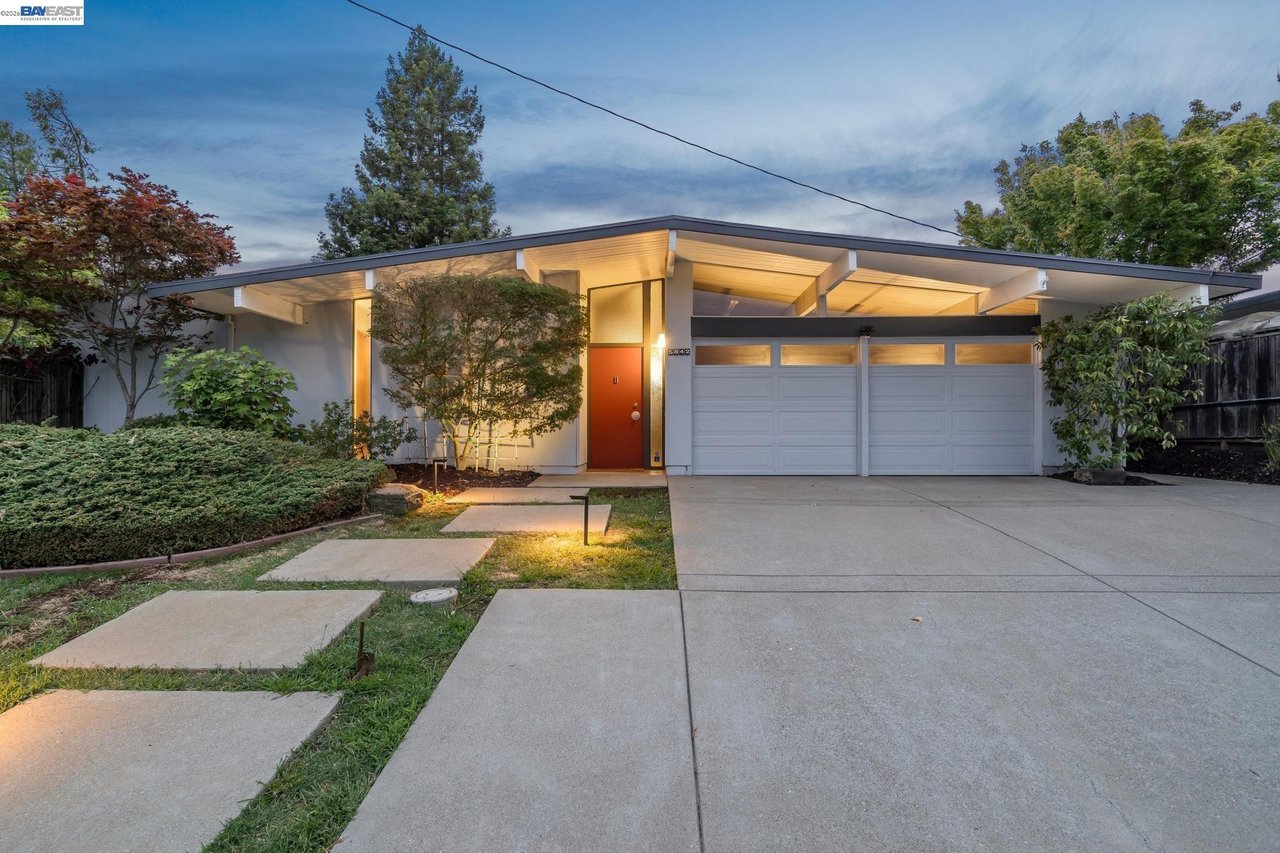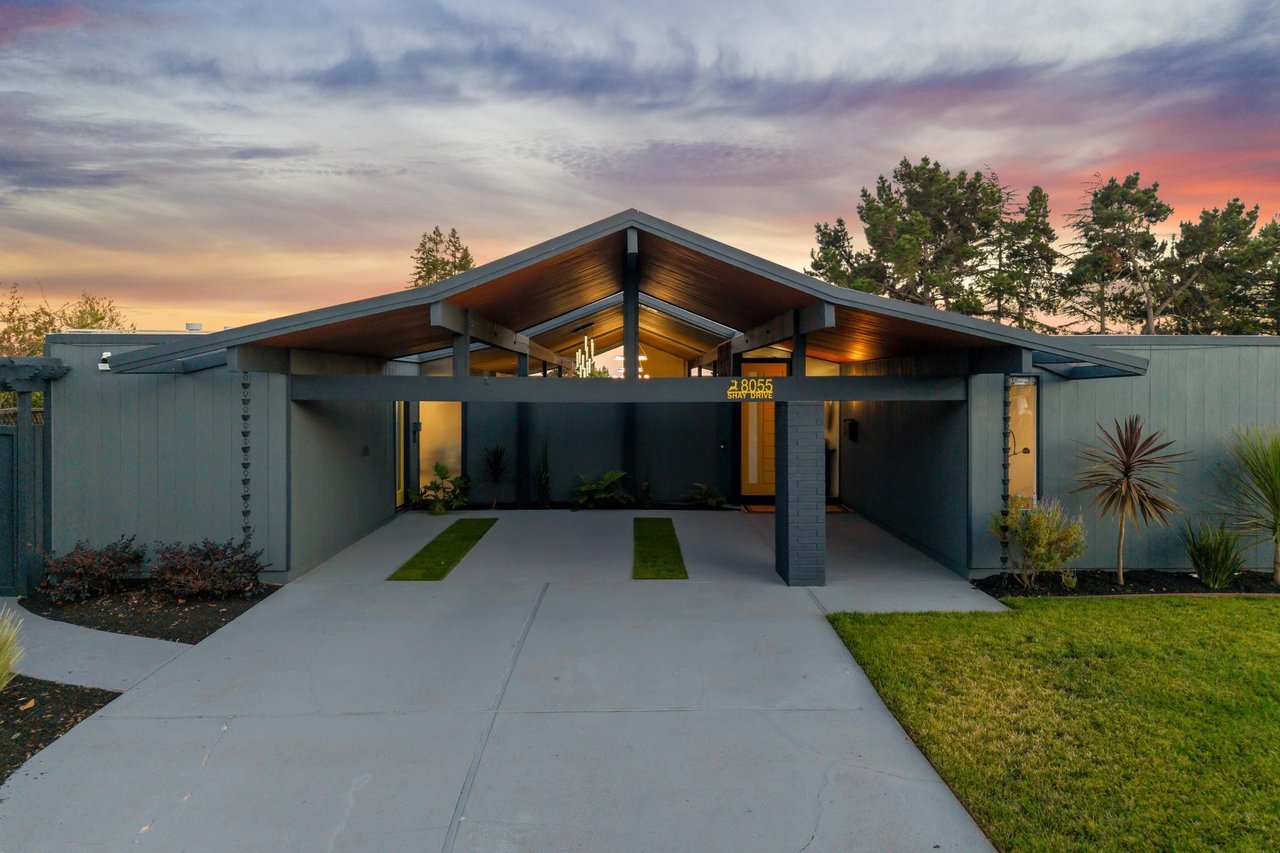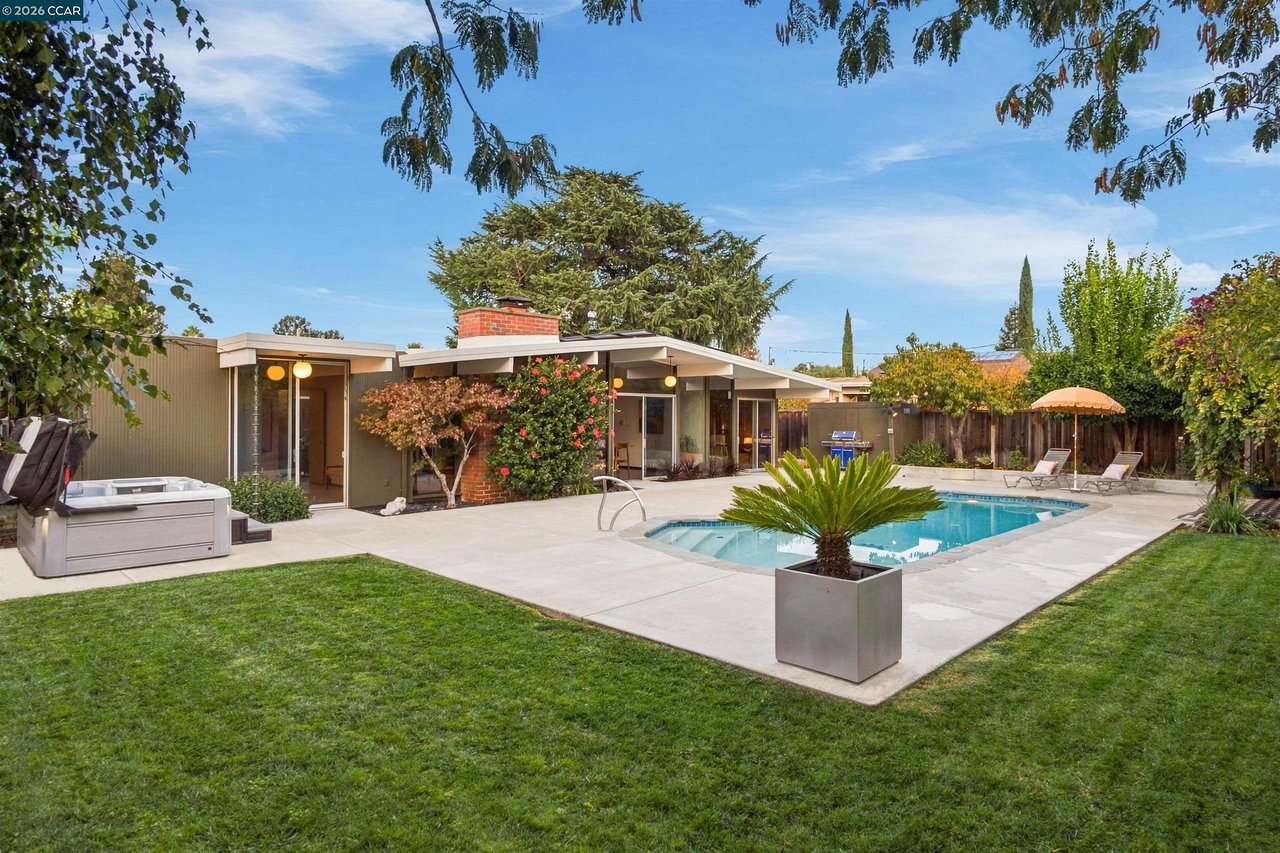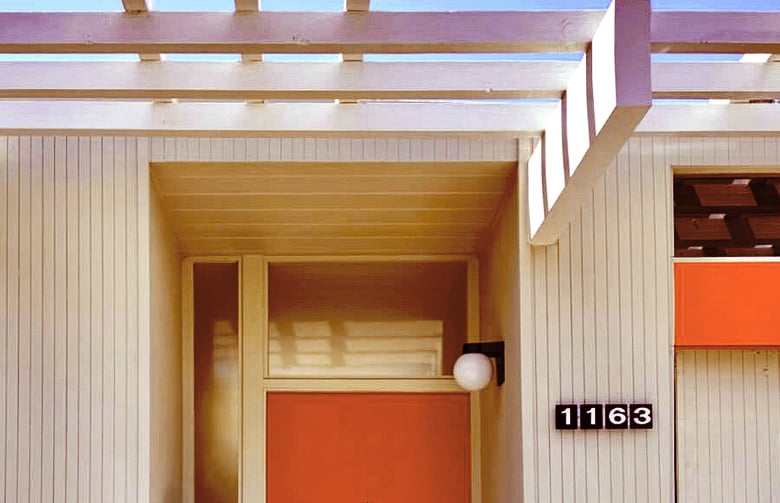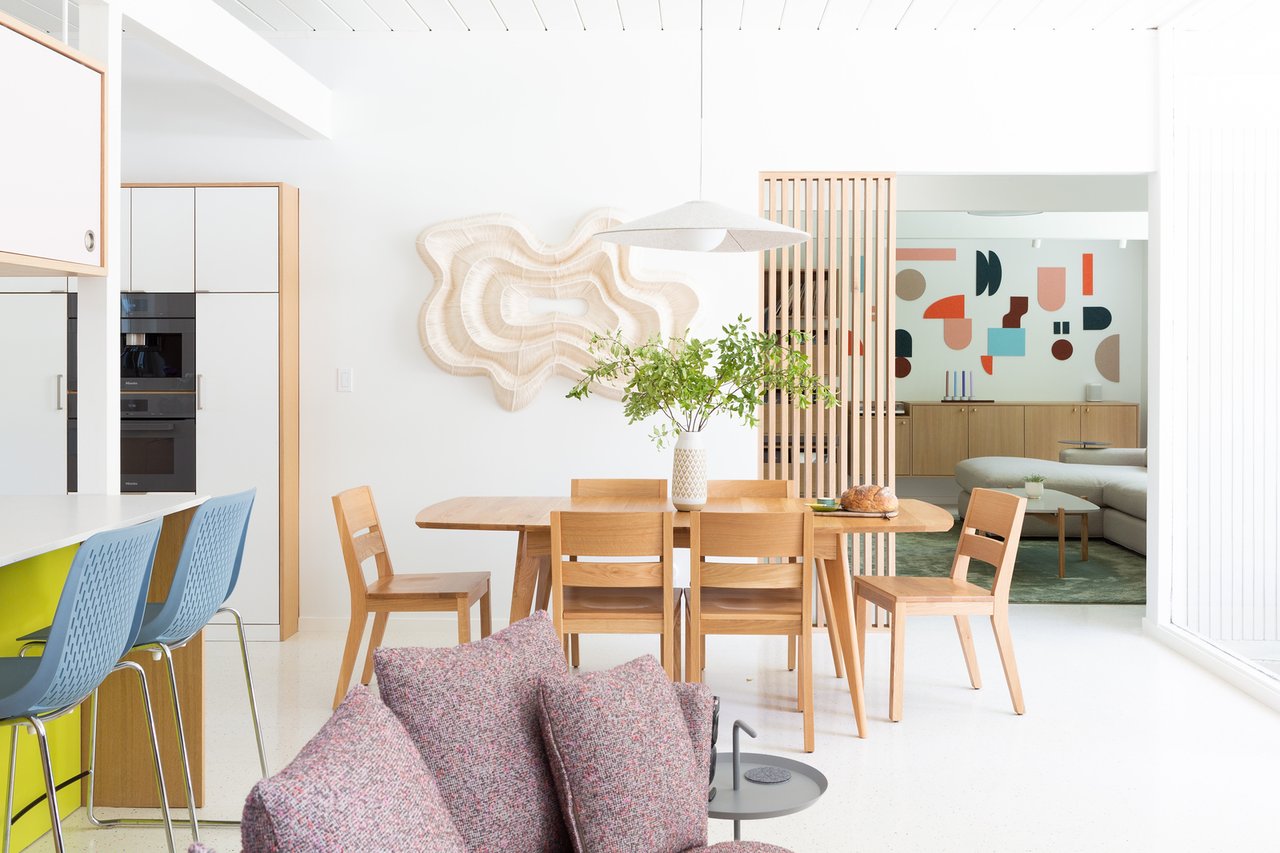
Featured photo: John Shum
If you're looking for Eichler homes in Walnut Creek, CA or Eichler homes in Concord, CA, it helps to know they aren't all in one neighborhood. These two cities have six distinct Eichler groupings: three Concord tracts built between 1963 and 1965, and three Walnut Creek neighborhoods that span Joseph Eichler's first major East Bay project in the 1950s and two much later pockets.
I live in an Eichler in Rancho San Miguel and previously served on the Rancho San Miguel Association board. I've also represented homes in Concord's tracts. This page is the overview: how the neighborhoods compare and a link to the full guide for each one.
Highlighted areas are approximate and based on the streets named in each neighborhood guide. Map data © OpenStreetMap contributors.
Six Neighborhoods at a Glance
These figures come from the tract guides and published sources such as the Eichler Network. They don't all use the same wording, and they aren't a new house-by-house census.
Tract | City | Approx. homes | Years built | Notable features |
|---|---|---|---|---|
Concord | 77 Eichlers (Eichler Network) | 1964 on homes I've sold; 1963–1965 group | Largest Concord tract; more model variety; next to Concord Community Park | |
Concord | 69 (Eichler Network, Eichler Vault); about 70 in the tract guide | 1963 and 1964 | Three basic plans; off Mendocino; no HOA | |
Concord | 41 | 1965 | Smallest Concord tract; Claude Oakland "CC" plans; no HOA | |
Walnut Creek | About 375 of 535 (Eichler Network); "more than 350" per the association | Proposed 1954; built 1955–1958 | First major East Bay Eichler project; voluntary association and a separate swim club | |
Walnut Creek | 34 completed | Late 1960s into the early-to-mid-1970s | Claude Oakland for J. L. Eichler Associates; larger later plans | |
Walnut Creek | Seven reported (Eichler Network) | Documented examples date to 1971 | Small enclave near Boundary Oak; distinct from Walnut Grove |
Read the tract page before you assume any one house is typical. Not every home on every named street is an Eichler.
Concord's Three Eichler Tracts
Joseph Eichler built all three Concord tracts between 1963 and 1965. They share post-and-beam construction, walls of glass and, in many plans, a central atrium. Rancho de los Santos and Rancho del Diablo have no homeowners association and no shared tract amenities. For Parkwood Estates, HOA status isn't consistently reported, so confirm it for the specific home through the preliminary title report and seller disclosures.
Parkwood Estates
Parkwood Estates is Concord's largest Eichler tract, with 77 Eichlers according to the Eichler Network and a few conventional ranch homes mixed in. County records for the homes I've sold here show them built in 1964. Most are Claude Oakland designs, including "CC" plans such as the CC-174 and CC-184; Jones & Emmons is also credited, including the CC-1804 carport model. The tract has more model variety than the other Concord neighborhoods — the Eichler Network singles out a double-steep-gable atrium model — and slightly larger homes and lots. Gainsborough, Merridan, Lancashire and Barrington Drives form a self-contained enclave with no through streets, between Concord Community Park and Babel Lane. Read the full Parkwood Estates guide.
Rancho del Diablo
Rancho del Diablo has about 70 homes — 69, according to the Eichler Network and Eichler Vault — on Phoenix Street, Sacramento Street and Wilson Lane, off Mendocino Drive. County records for homes I've sold here list 1963; the Eichler Network dates the neighborhood to 1964, so it's fair to say the homes were built in 1963 and 1964. Claude Oakland is credited with the pitched-roof atrium model, and Jones & Emmons with other plans, including Plan OJ-1184. The three basic floor plans are a pitched-roof atrium model of about 1,795 square feet, a carport atrium model of about 1,656 square feet, and a flat-roof, non-atrium model of about 1,367 square feet. Rancho de los Santos is only a few blocks away. Read the full Rancho del Diablo guide.
Rancho de los Santos
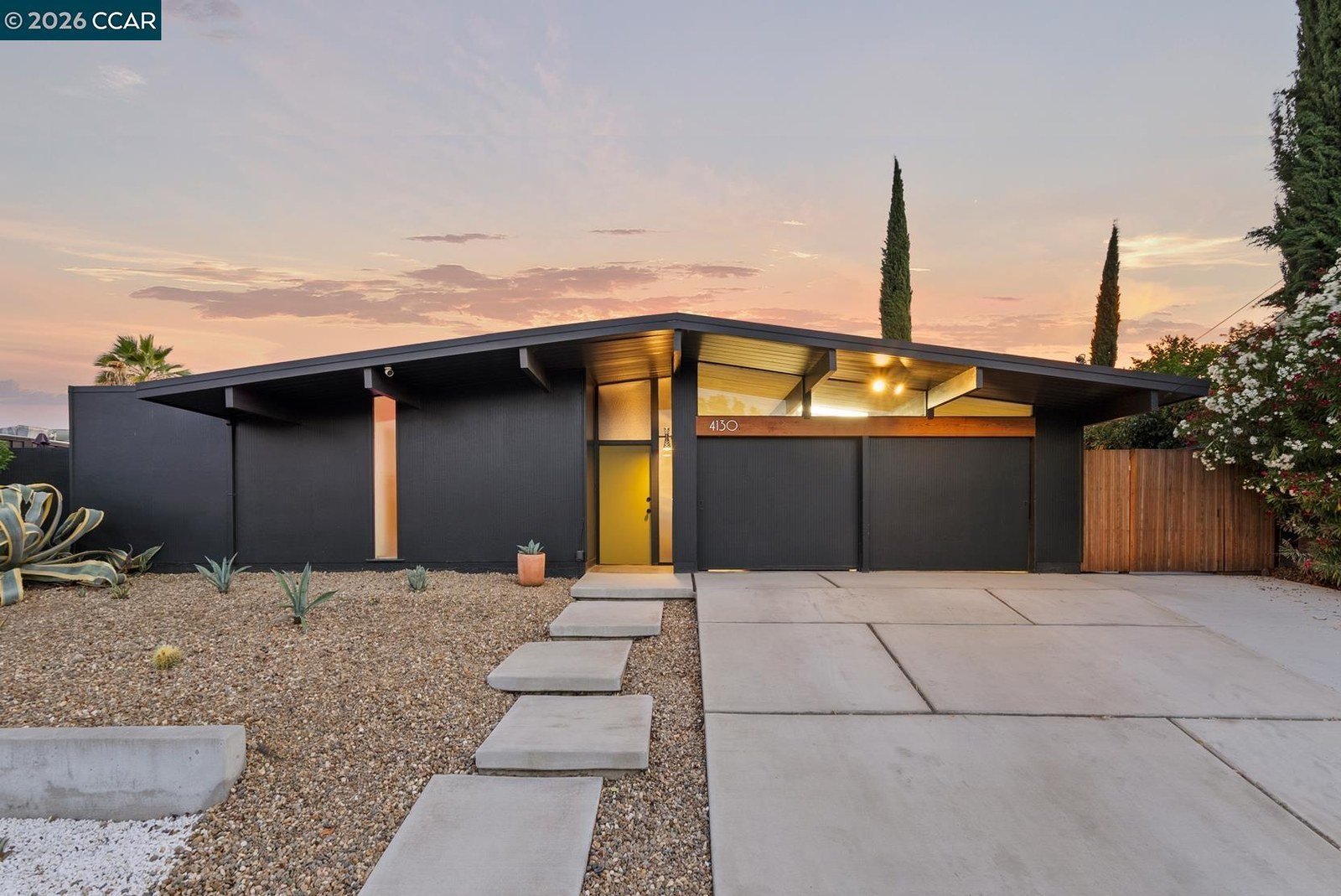
Rancho de los Santos is the last and smallest of the three: 41 homes, built by Eichler Homes in 1965. UC Berkeley's Environmental Design Archives list it as Subdivision 3142, also called "Rancho del Diablo #2," and hold the plans in the Claude Oakland & Kinji Imada collection, with "CC" numbers such as CC-13, CC-194 and CC-294. The tract is bounded by West Street, Salem Street, Santa Fe Court and Houston Court. The Eichlers I've listed here are single-story, four-bedroom, two-bath homes of roughly 1,600 to 1,800 square feet, many of them built around a central atrium. Read the full Rancho de los Santos guide.
Walnut Creek's Three Eichler Neighborhoods
Rancho San Miguel
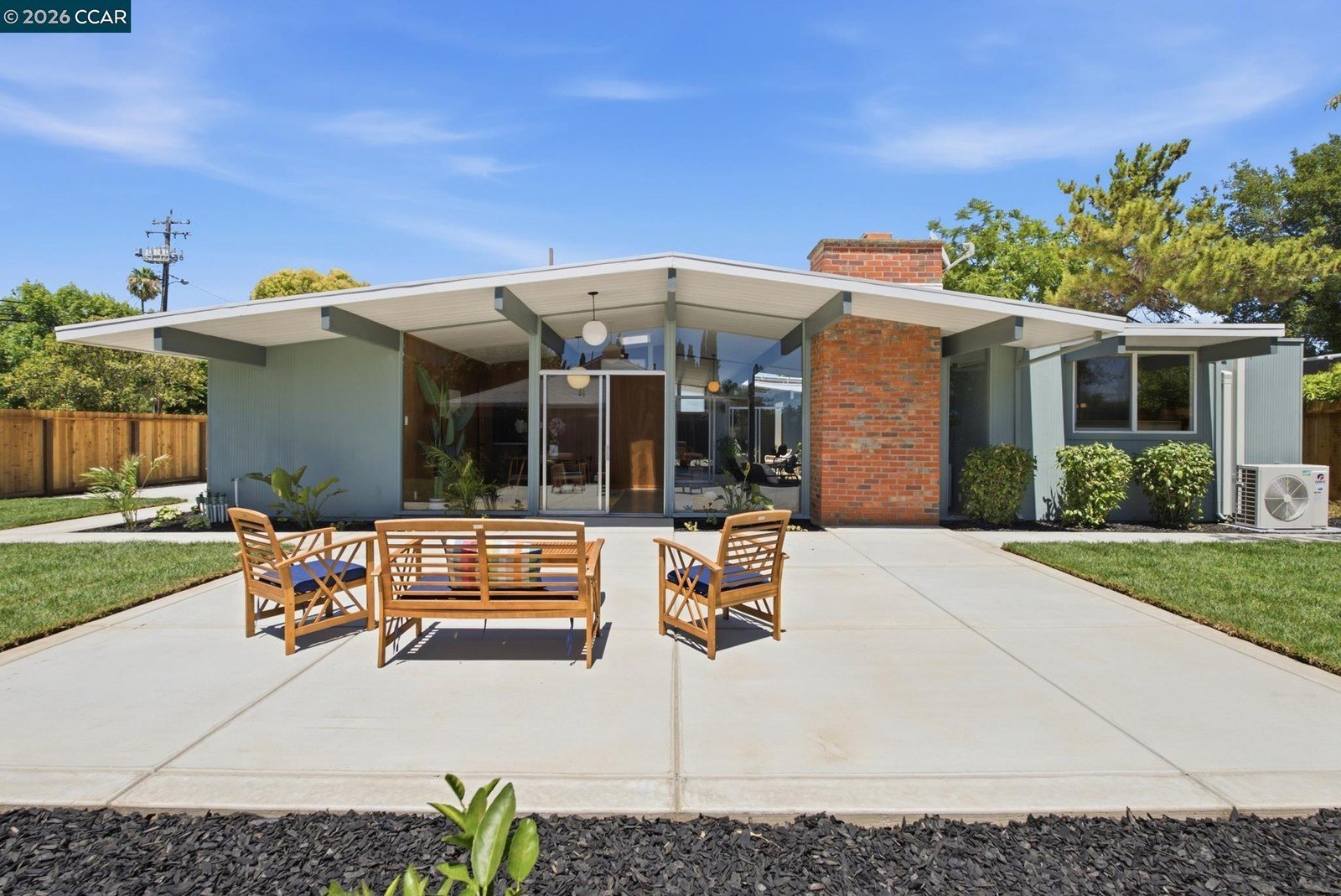
Rancho San Miguel was Joseph Eichler's first major East Bay project, and it's still the largest Eichler neighborhood in either city. He presented the plan in November 1954; homes were built from 1955 to 1958 south of Ygnacio Valley Road. The Eichler Network describes about 375 Eichlers among 535 homes; the association's history says "more than 350." Either way, it's several times larger than any Concord tract. The architects were Anshen & Allen and Jones & Emmons. Earlier homes have flat or gently pitched roofs; the atrium, which Robert Anshen introduced in 1957, shows up in later plans. The neighborhood has a voluntary association, incorporated in 1956, with optional $30 annual dues, and a separate swim club with its own membership. This one is personal: I own a home here. Read the full Rancho San Miguel guide.
Walnut Grove, the Northgate Eichlers
Walnut Grove is a later, separate chapter from Rancho San Miguel. Commonly called the Northgate Eichlers, it originally had a different name. The Eichler Network counts 34 completed homes, dating broadly from the late 1960s into the early-to-mid-1970s. The final completion year still needs confirmation; project drawings at UC Berkeley are dated 1969–1970, but those aren't completion dates for every house. Claude Oakland & Associates designed the neighborhood, and the historic drawings name J. L. Eichler Associates, Inc., one of the companies through which Joseph Eichler continued building after his original company's mid-1960s financial collapse. A later date doesn't make these homes lookalikes. The original brochure offered homes of roughly 2,305 to 2,500 square feet, and Destination Eichler documents double-gable, gallery-style and H-plan layouts here. "Super Eichler" is a useful description, not one official model name. The documented streets — Eichler portions, not every house — are Wiget Lane, Clyde Drive, Brighton Way, Bliss Court and a separated stretch of Belford Drive west of Wiget. Read the full Walnut Grove / Northgate guide.
Pazzi Road and Valley Vista Road, near Boundary Oak
Near Boundary Oak Golf Course, a much smaller pocket on Pazzi Road and Valley Vista Road is easy to confuse with Walnut Grove, because both may be marketed as Northgate or Super Eichlers. They aren't the same neighborhood. The Eichler Network describes seven late Eichler homes here. "Super Seven" is a broker nickname used in Eichler Network reporting, not an official tract name. Documented examples date to 1971. Claude Oakland's work is central to the pocket; Dwell identifies 3601 Valley Vista as a 1971 Oakland design. Published examples include that 2,222-square-foot atrium home, a 1971 house of 2,309 square feet on Pazzi Road, and an H-shaped plan on Valley Vista Road. Those are documented examples, not a complete roster. Read the full Pazzi and Valley Vista guide.
How Concord and Walnut Creek Eichlers Differ
Rancho San Miguel is the early chapter: planned in 1954, built from 1955 to 1958, designed by Anshen & Allen and Jones & Emmons, with the atrium arriving mid-stream. Some original homes are more compact than later work; the 1956 Eichler I helped my buyers purchase on San Antonio Drive is about 1,540 square feet. What you get instead is a complete neighborhood, with parks, a voluntary association and a swim club.
Concord's three tracts are the early-to-mid-1960s chapter. By then, Claude Oakland's "CC" plans — and, in Parkwood Estates and Rancho del Diablo, Jones & Emmons designs — were well established: post-and-beam framing, walls of glass, clerestory windows and, in many homes, an atrium. These are smaller, tighter tracts than Rancho San Miguel, with a more consistent mid-1960s language from street to street.
Walnut Grove and the Pazzi and Valley Vista pocket belong to a later chapter. After the original company's mid-1960s financial collapse — sources differ on whether to date the bankruptcy to 1966 or 1967 — Joseph Eichler continued through successor companies, including J. L. Eichler Associates. Claude Oakland's later plans are often larger, with more varied rooflines. "Super Eichler" describes those more elaborate late homes; it isn't a single floor plan, and it isn't a test of authenticity. Confirm the individual house in the records rather than trusting a nickname or a construction date alone.
Let's Talk Eichlers
If you want to compare tracts, look at a specific plan, or talk through buying or selling, I'm happy to help. I'm the #1 East Bay Eichler Realtor by sales volume (2026) and the #1 Concord Eichler Realtor by sales volume (2025 & 2026). I have Top 3 Concord Eichler highest solds. I live in an Eichler in Rancho San Miguel, previously served on the RSMA Board, and I'm an Eichler Network East Bay Realtor.
Start with a home valuation, browse my recent listings and sales, or contact me. You can also start from my Concord or Walnut Creek page.
Concord and Walnut Creek Eichlers FAQ
How many Eichler neighborhoods are in Concord and Walnut Creek?
Six: Parkwood Estates, Rancho del Diablo and Rancho de los Santos in Concord (1963–1965), and Rancho San Miguel, Walnut Grove (the Northgate Eichlers), and the Pazzi Road and Valley Vista Road pocket near Boundary Oak in Walnut Creek.
How many Eichlers are there in Walnut Creek?
It depends which neighborhood you mean. The Eichler Network describes about 375 Eichlers in Rancho San Miguel, while the association's history says "more than 350." Walnut Grove has 34 completed Eichlers — 86 was the planned figure, not the number built. The Eichler Network reports seven late homes on Pazzi Road and Valley Vista Road, as an enclave count, not a claim that every house on those roads is an Eichler. Those published counts are not a new official city total.
Do the Concord Eichler tracts have an HOA?
Rancho de los Santos and Rancho del Diablo have no homeowners association and no shared tract amenities. For Parkwood Estates, HOA status isn't consistently reported, so confirm it for the specific home through the preliminary title report and seller disclosures.
Are the Northgate or Super Eichlers the same as Rancho San Miguel?
No. Rancho San Miguel is the earlier 1950s neighborhood where I live. Walnut Grove, commonly called the Northgate Eichlers, is a separate, smaller, later development, and the Pazzi and Valley Vista pocket near Boundary Oak is a third, still smaller group. "Super Eichler" describes certain later, larger plans; it is not a neighborhood name and not one official model.
How can I tell a true Eichler from a look-alike?
Start with the address, the original plan and the property records, not a marketing label or the year alone. A later date doesn't automatically make a house an imitation — Walnut Grove and the Boundary Oak pocket are part of Joseph Eichler's later building program — but a dramatic roof or a "Northgate" listing isn't enough on its own. I can help you check a house.