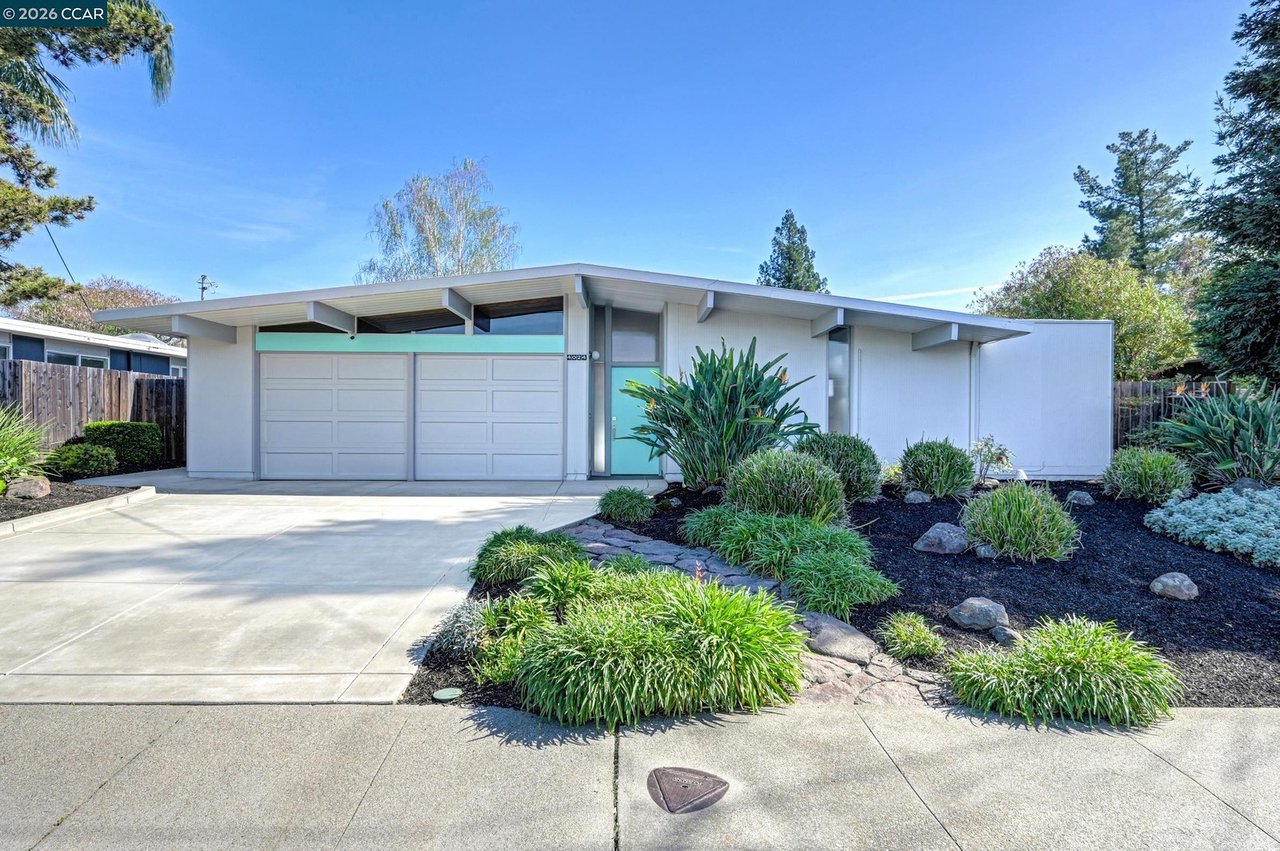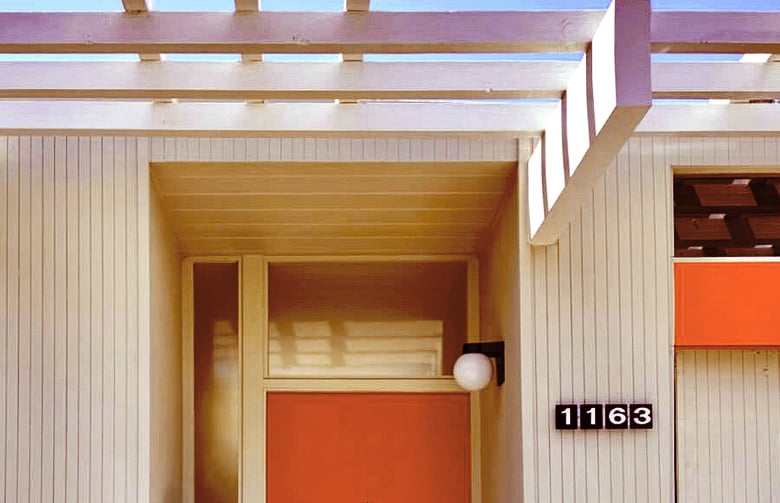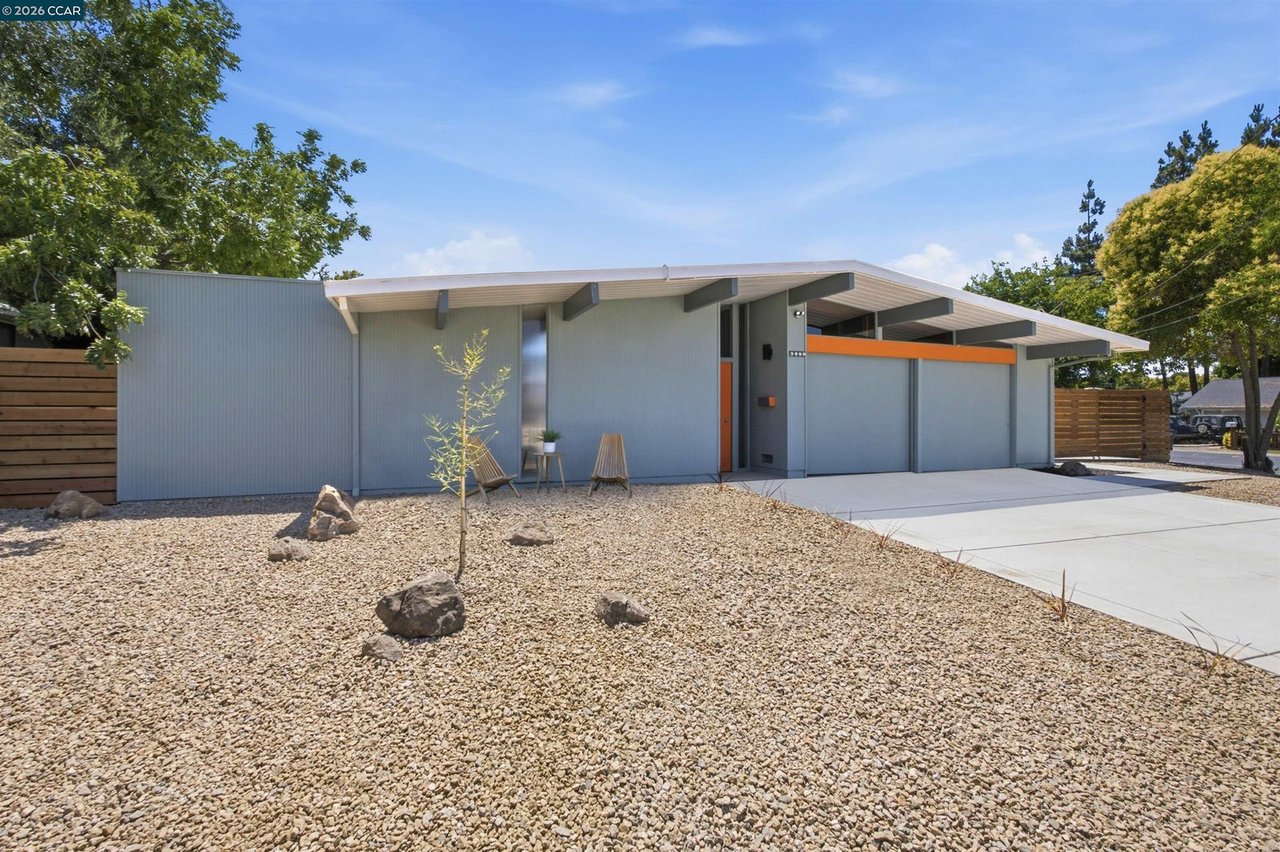
Featured photo: 3998 Salem St, Rancho de los Santos, Concord. Listed by Theresa
When an Eichler needs new siding, the temptation is to treat it like any other house and reach for whatever the lumberyard has in stock. I would try my best to avoid that. The grooved plywood on these homes is part of the architecture, and Eichler buyers notice when it's been replaced with something that doesn't belong. I live in an Eichler in Rancho San Miguel, and in Concord's tracts I've watched neighbors trade leads on mahogany siding the same way they trade leads on hard-to-find interior parts. Here's how I think about replacement if you own a home in Concord, Walnut Creek or elsewhere in the East Bay.
What's Eichler Siding?
Eichler siding is milled plywood panels that came in several variations of groove spacing and thicknesses. Exterior siding and interior mahogany paneling are related, but they aren't the same thing. Inside, many of the homes I've sold have kept their original mahogany wall paneling. Outside, Joseph Eichler used plywood panels milled with distinctive groove patterns, not the horizontal lap siding common on later suburban houses.
An Eichler Network guide to exterior siding, by Jeff Nichols, describes that shift in plain terms. Early Eichlers sometimes had horizontally oriented siding. By the mid-1950s, with rare exceptions, he had switched to vertical grooves placed close together. The same guide notes that the most common patterns can be identified by measuring from the center of one groove to the center of the next — typically 1 5/8 inches, 2 inches, or 8 inches on center — and by measuring the width of the groove itself, often 1/8 inch, 3/8 inch, or 1/4 inch. The 8-inch pattern is the swirl-textured "Plank-Tex" once made by U.S. Plywood; it isn't unique to Eichlers, but it does show up on some mid-1960s homes.
Thickness varies too, commonly 3/8 inch, 1/2 inch, or 5/8 inch in that account, and it can differ from house to house in the same tract, or even from one pattern to another on the same street. Paint buildup can hide the true measurement, so the bottom edge is often the most useful place to check. I wouldn't order a stack of panels from a photograph of the facade alone.
Matching What's on Your House
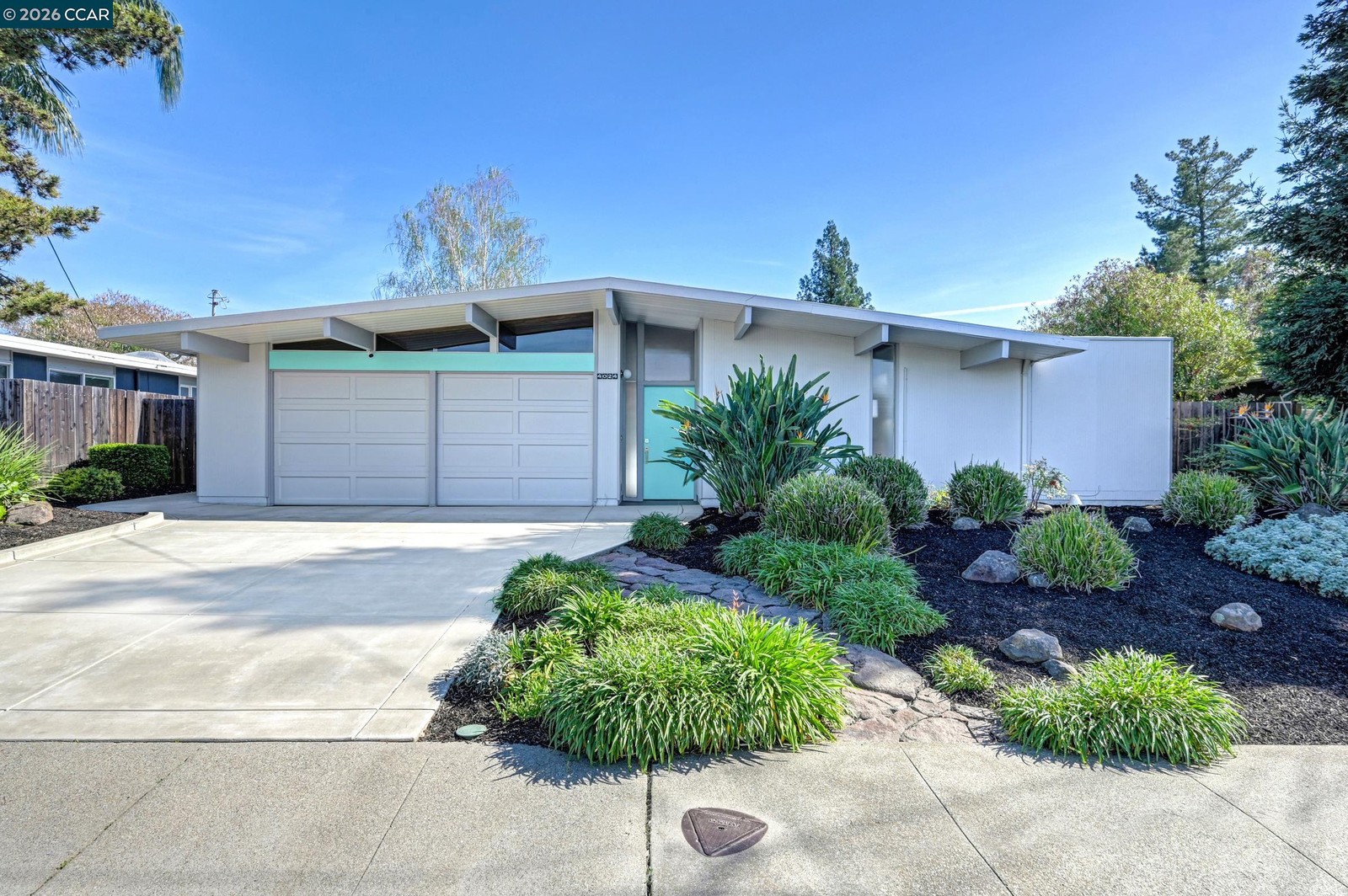
Period-correct replacement starts with the house in front of you: the groove spacing, the groove width, the panel thickness, the height of the sheets, and the texture. Original Eichler siding was typically a semi-smooth plywood that showed the wood grain, not a heavy rough-sawn face. Specialty mills still produce grooved plywood in these patterns, and the Eichler Network guide has described later material options including Douglas fir and a mahogany product sold under the Breckenridge name. Early redwood plywood, the same guide notes, has become very hard to find. What's on the market changes, so confirm current products and grades with a supplier who knows these panels, rather than assuming a brand name from an older article is still the right match.
Details at the edges matter as much as the grooves. These panels were designed to interlock. A square-edged sheet that looks close in a showroom can leave a weak joint at the first rain. If you're replacing only some of the walls, an exact thickness match keeps the new work flush with what's staying; a slightly thinner panel can force awkward workarounds. I'm not a siding contractor, and I wouldn't invent a materials list for your house. Measure first, then get local bids from installers who have worked on Eichlers.
Repair, Replacement and What Buyers Notice
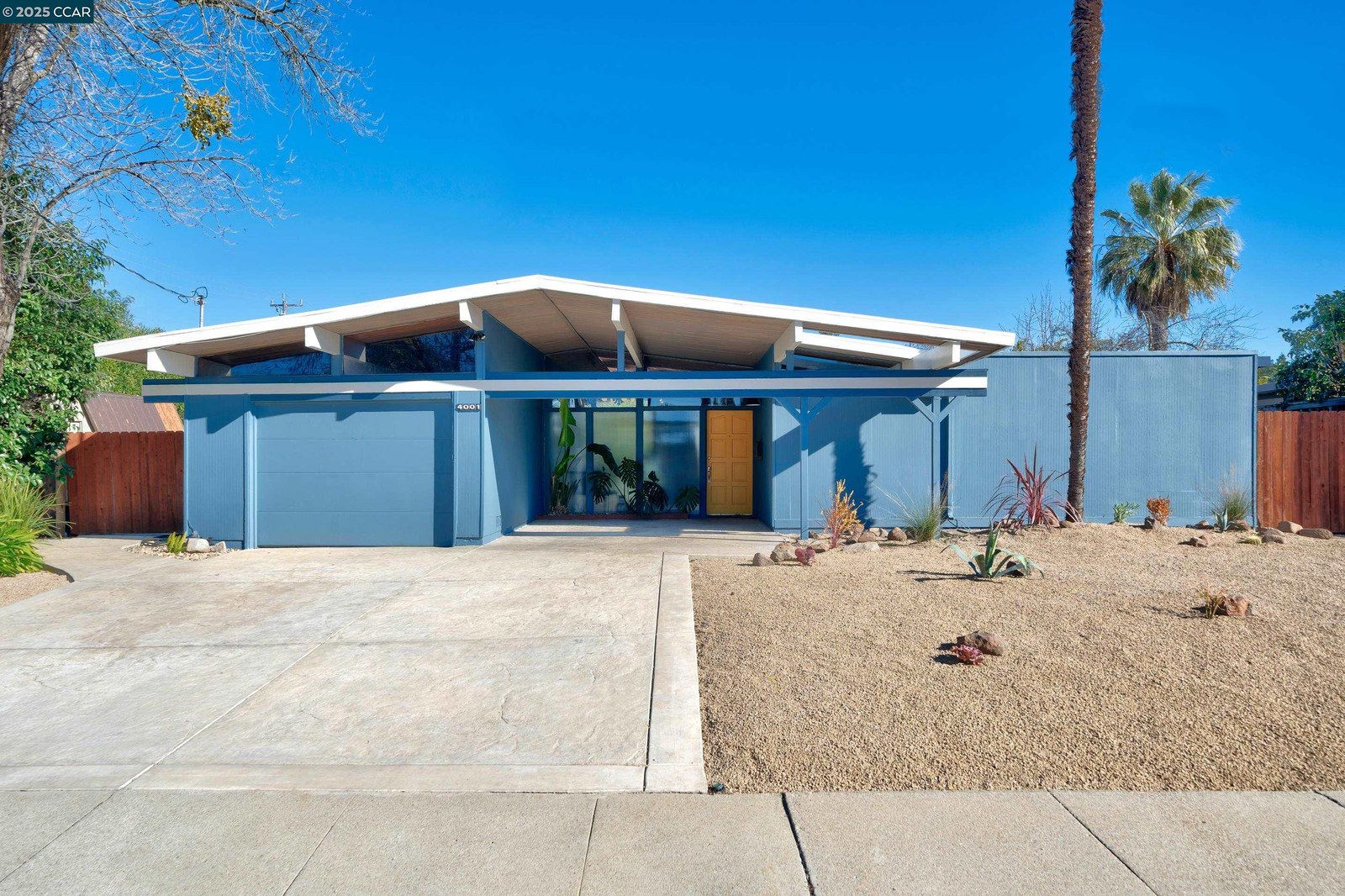
Not every weathered wall needs to come off. Localized dry rot, especially near grade, at corners or around openings, can sometimes be repaired with carefully matched panels. A full re-side makes sense when the damage is widespread, the pattern has already been lost, or a previous replacement used the wrong material. Either way, the goal is the same: keep the vertical rhythm and the modest texture that make the street elevation an Eichler, not a generic remodel.
Buyers in these neighborhoods are often looking for original character, or for a careful restoration of it. Homes I've sold in Parkwood Estates, Rancho del Diablo and Rancho de los Santos have kept interior mahogany, unpainted ceilings and other period details, and Concord neighbors have long helped each other find mahogany siding when a wall needs work. I wouldn't put a dollar figure on that. I would say that vinyl, rough-sawn sheets with the wrong groove, or a horizontal lap product tend to fight the design, and that a thoughtful match is part of the story you tell when you sell.
The same design test I use on interiors applies here. My background as a corporate design director makes me ask whether a change works with the structure and the elevation, or interrupts it. That's also how I look at kitchen updates in East Bay Eichlers: warm wood and careful materials should support the architecture, not cover it up.
Permits and Local Rules
Siding work can require a permit, especially if it involves structural repair, new openings, or a change in the exterior assembly. I wouldn't guess at what your project needs. Local rules are set by the city or county that has jurisdiction over the house: the City of Concord, the City of Walnut Creek, the City of Oakland, Contra Costa County, or — for Greenridge in unincorporated Castro Valley — Alameda County. Ask the building department before work starts, and keep the permit history with the house records.
Association rules, if any, are separate from the permit. Sequoyah Hills has an active homeowners association that reviews exterior changes, and the City of Oakland's design review also applies there. Rancho San Miguel has a voluntary neighborhood association. Rancho de los Santos and Rancho del Diablo have no HOA. For Parkwood Estates, later Walnut Creek neighborhoods and Greenridge, confirm any association, dues or recorded restrictions on the title report and seller disclosures rather than assuming there are none.
Planning the Work
- Measure the groove spacing, groove width, thickness, sheet height and texture on the actual walls.
- Decide whether you are repairing selected panels or replacing a larger run, and how the new work will meet what's staying.
- Ask the building department, and any association with review authority, what approvals you need.
- Get more than one local bid from installers familiar with Eichler panels, and ask what's included: flashing, trim, sealing of edges, and disposal of damaged material.
- Save invoices, permits and product information. When you sell, that file is part of the home's story.
Costs vary with the pattern, the condition of the substrate, the height of the walls, access and the scope of the repair. I don't publish a price range here. Get current local bids.
Eichler Siding FAQ
Can I use regular plywood siding from a lumberyard?
Only if it actually matches the pattern, thickness, texture and edge condition of your house. Standard groove spacing is often different from Eichler's. Measure first, then compare.
Is mahogany the only correct material?
No. Some interiors and some exterior work are mahogany, and Concord owners often look for mahogany siding when they can find it. The Eichler Network's siding guide also describes other plywoods that have been used for replacement, including Douglas fir, and notes that original redwood plywood is now scarce. Match the look and the dimensions of your house rather than shopping by a single species name.
Will new siding help when I sell?
Period-correct work photographs well and tells buyers the house has been cared for in a way that respects the design. A mismatched product can do the opposite. If you're thinking about selling, start with a conversation about the whole house, not just the siding, in my guide to selling an Eichler or with a home valuation.
Do I need a permit?
Maybe. It depends on the scope of the work and on the rules in Concord, Walnut Creek, Oakland, Contra Costa County or Alameda County, whichever applies to your house. Confirm with the building department, and with any association that reviews exterior changes, before you start.
Let's Talk About Your Eichler
If you're planning siding work, or you want to know how buyers will see the house, contact me. I'm the #1 East Bay Eichler Realtor by sales volume (2026) and the #1 Concord Eichler Realtor by sales volume (2025 & 2026). I have Top 3 Concord Eichler highest solds. I live in an Eichler in Rancho San Miguel, previously served on the RSMA Board, and I'm an Eichler Network East Bay Realtor. You can also start with my East Bay Eichler guide or a home valuation.