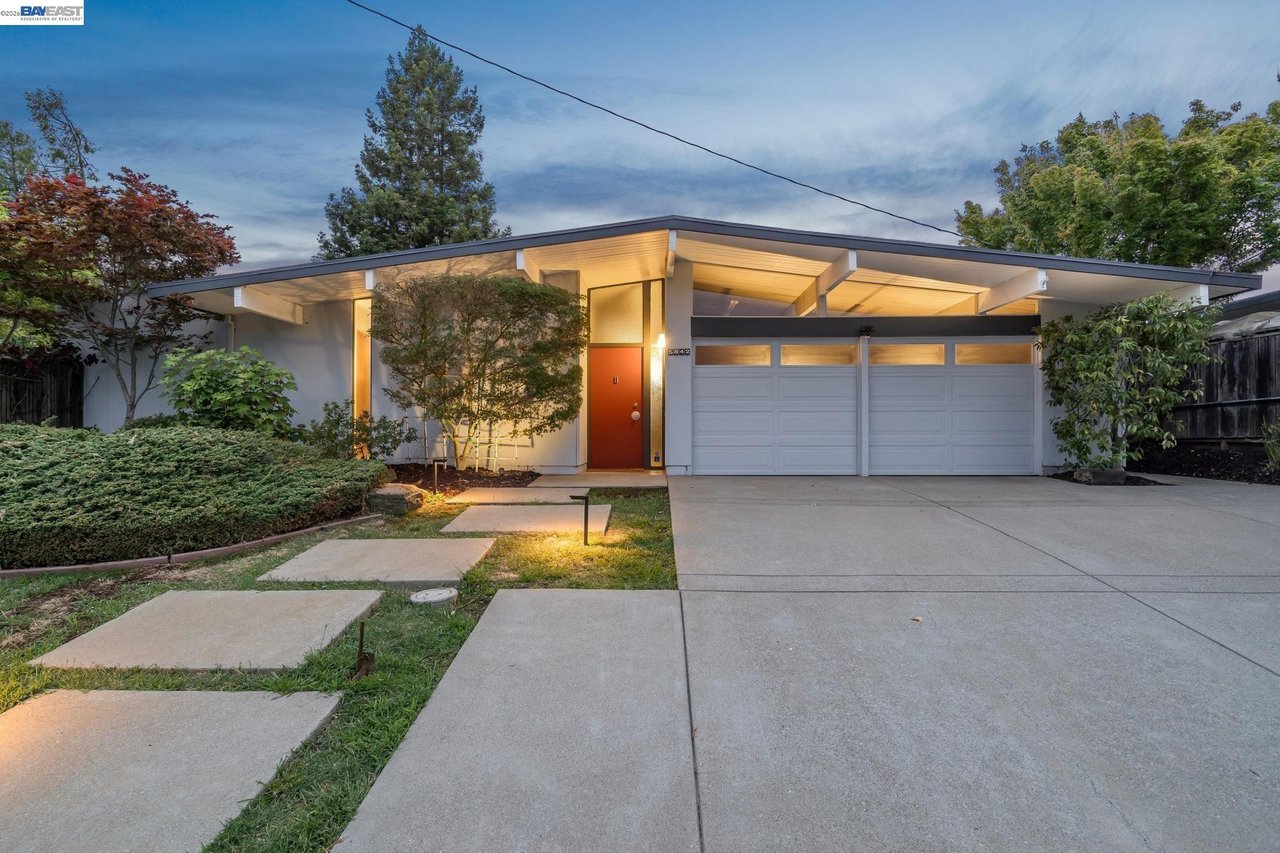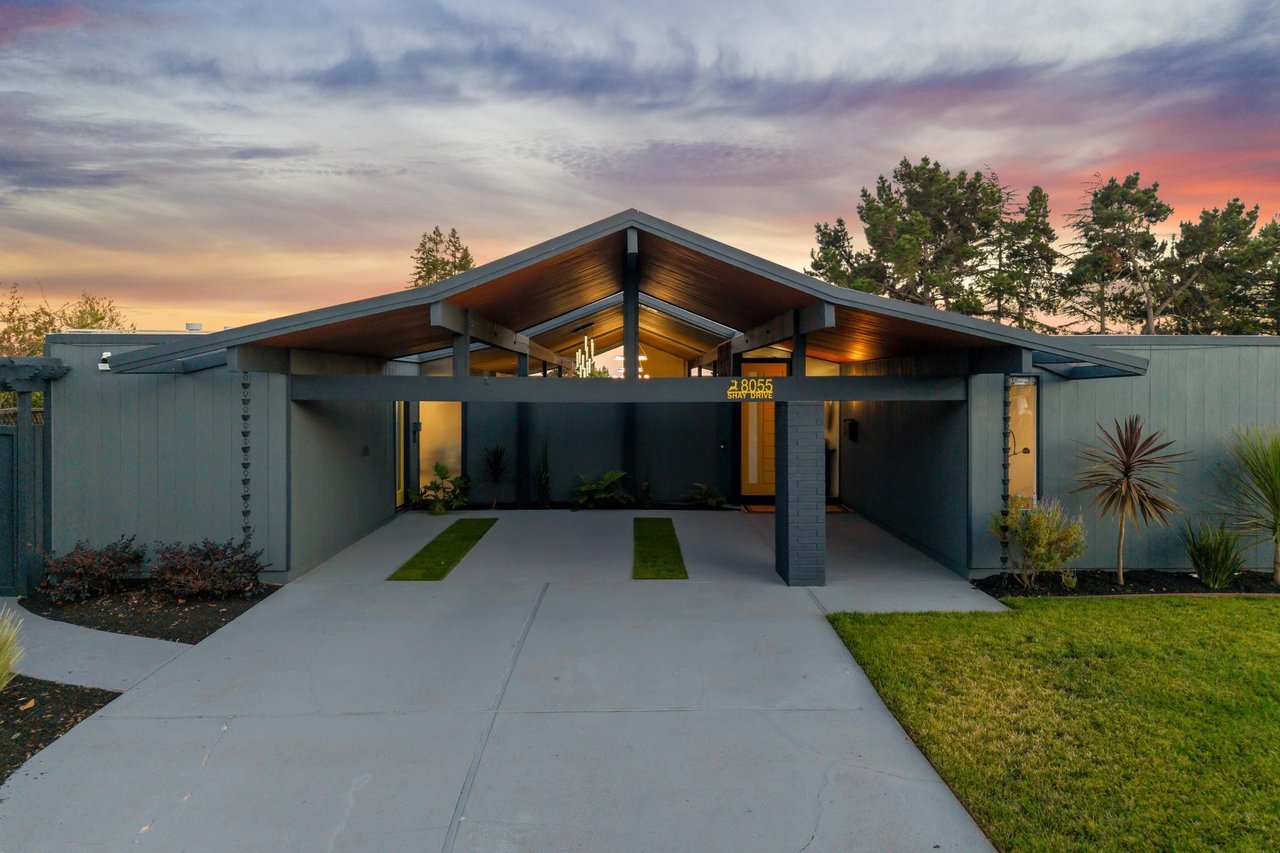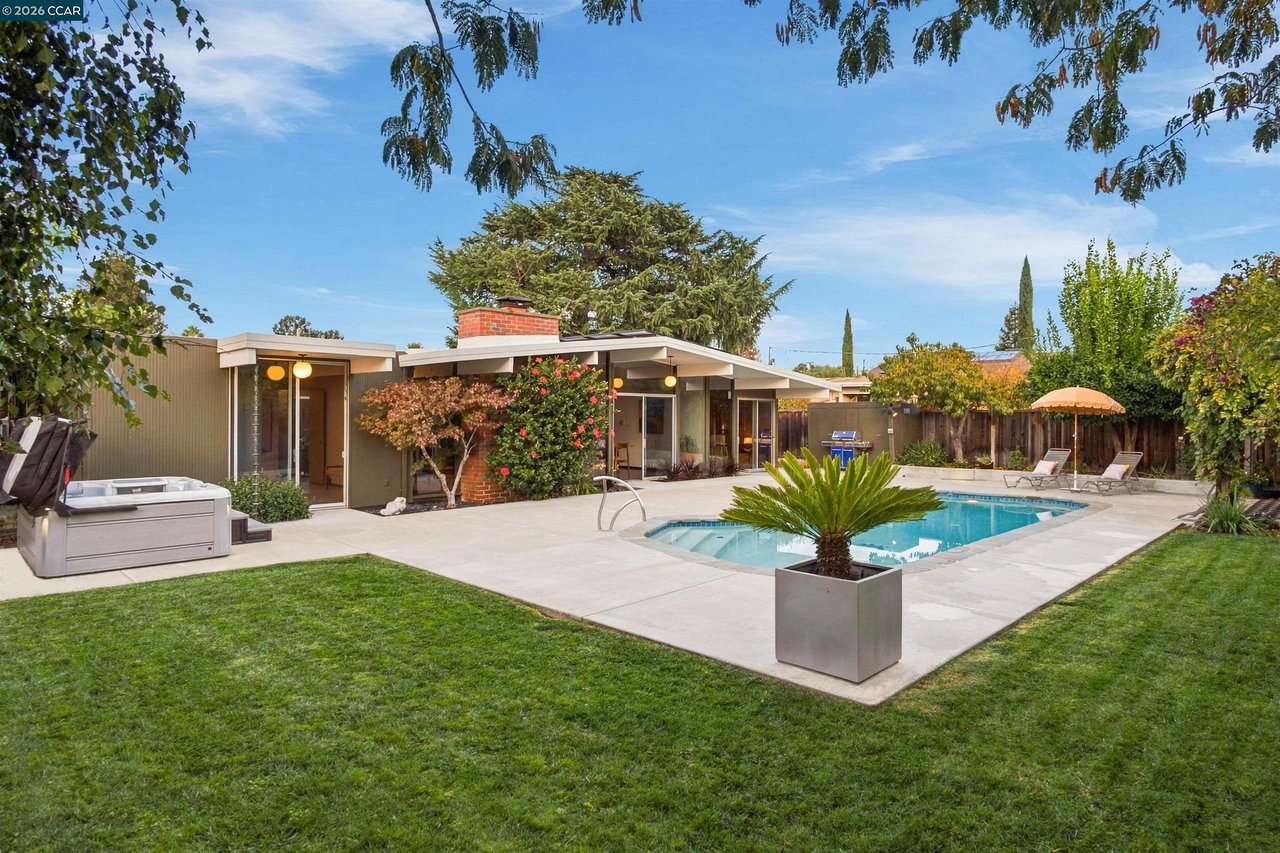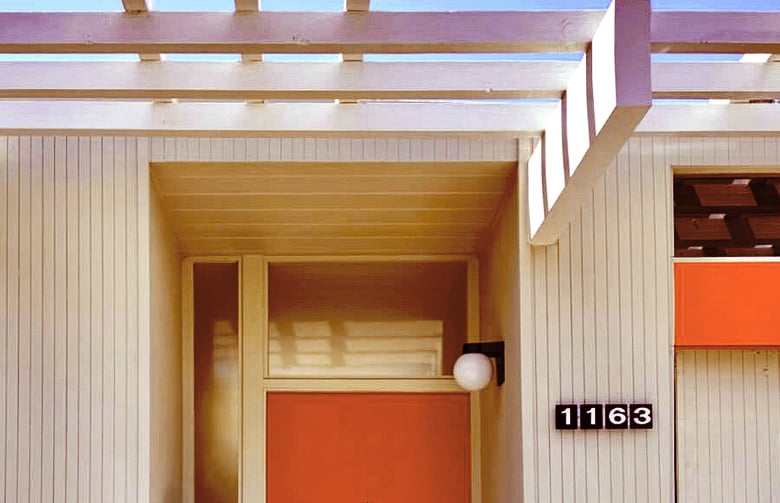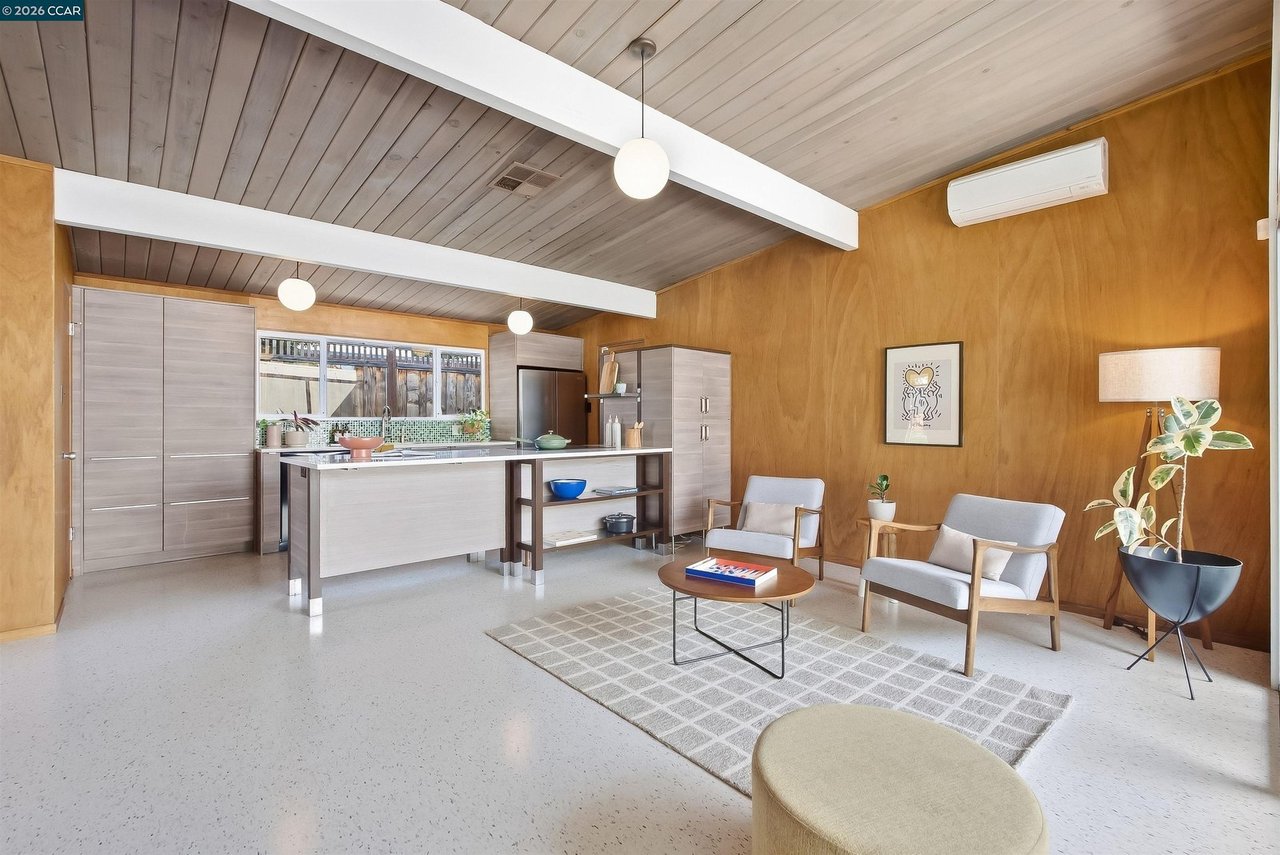
Featured photo: 3701 Gainsborough Dr, Parkwood Estates, Concord. Listed by Theresa
Updating an Eichler is less about chasing a trend and more about protecting what makes the house work: the plan, the light, the structure and the original details. I live in an Eichler in Rancho San Miguel, previously served on the association board, and was a corporate design director before I sold homes. The question I ask on every project is the same: does this change work with the post-and-beam structure, the daylight and the circulation, or does it interrupt them?
This page is a starting point, not a substitute for a roofer, an inspector or a building department. It gathers the maintenance and renovation issues I see most often on East Bay Eichlers and points you to deeper guides on roofs, atriums, siding and kitchens. For neighborhood context, start with the East Bay Eichler guide or the tract pages linked below. I don't quote renovation prices here; costs vary, and you should get local bids.
Start With the House You Have
Before anyone opens a wall, it helps to know the tract, the plan if it's documented, and what's already been altered. A CC-174, a Double-A and a later gallery plan don't live the same way, and an enclosed atrium or a converted garage changes both the floor area and the way light moves. Gather permits, a current floor plan and a clear account of the roof, heat and major work. Then decide what to repair, what to refresh and what to leave.
Intact original details are often an asset. Homes I've sold have kept mahogany paneling, unpainted tongue-and-groove ceilings, globe lighting, built-ins and, in some cases, an original kitchen or bath. Period-correct updates — VCT flooring, a carefully designed kitchen, a documented radiant-boiler replacement — can make a house more comfortable without erasing that character.
Radiant Heat and Comfort
Many East Bay Eichlers were built with radiant heat in the slab. A working system, or a documented update to the boiler, is part of how these houses were designed to be lived in. I wouldn't cut a slab casually, and I wouldn't leave the system's status as a surprise in escrow. At 4024 Salem Street, the home I sold had a newer radiant boiler along with period-correct VCT and an atrium entry. At 3713 Merridan Drive, a CC-174R still had radiant floor heat as well as an atrium.
Some owners add mini-split heating and cooling for rooms the original system doesn't serve as well, or as a supplement. The listing for 3701 Gainsborough Drive describes mini-split systems along with other documented updates. That's a useful example, not a prescription. The right approach depends on the existing radiant system, the glass, and what an inspector and a qualified mechanic find.
Roofs, Drainage and Insulation
Eichler roofs deserve special attention, whether the house has a low-slope plane, a gable or a more expressive later form. There often isn't a conventional attic, and atrium drains, fascia, skylights and ponding all belong in the same conversation as the surface itself. Built-up roofs, modified bitumen, single-ply membranes and spray foam are all used; none is automatically "the" Eichler roof. Insulation should be planned with a reroof and must meet the energy rules in force when you pull the permit. I don't quote R-values or replacement prices here.
For options, inspection issues and permit notes, read Eichler Roofs: Options, Insulation and Replacement.
Siding and Exterior Character
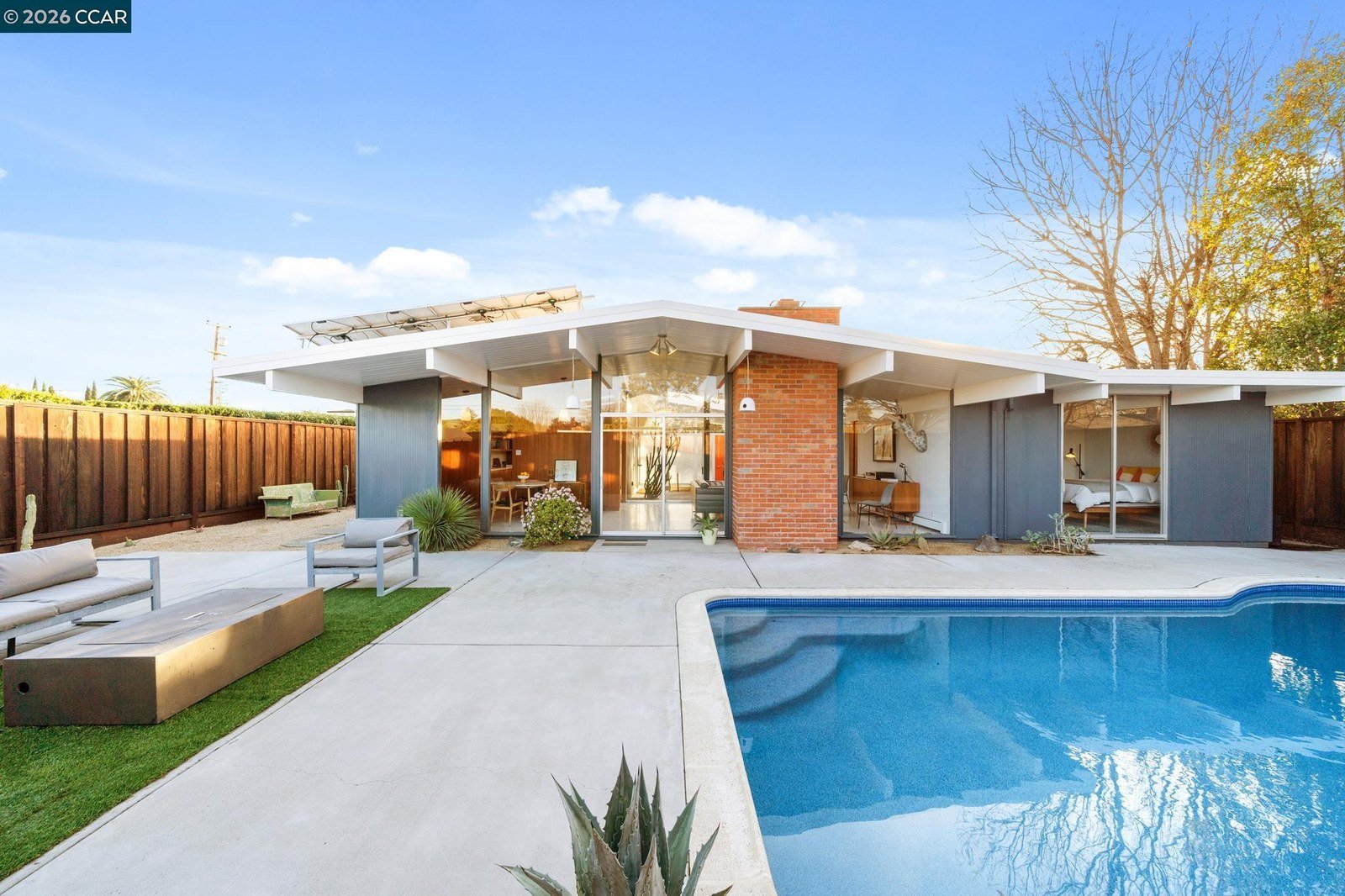
The grooved plywood on these houses is part of the architecture, not a generic finish. Concord neighbors have long traded leads on mahogany siding when a wall needs work. Match the groove spacing, groove width, thickness and texture of the actual house, and be wary of a horizontal lap product or a rough-sawn sheet that fights the elevation. Measure first, then get local bids from people who have installed these panels.
The full guide is Eichler Siding Replacement.
Atriums: Light, Drainage and Alterations
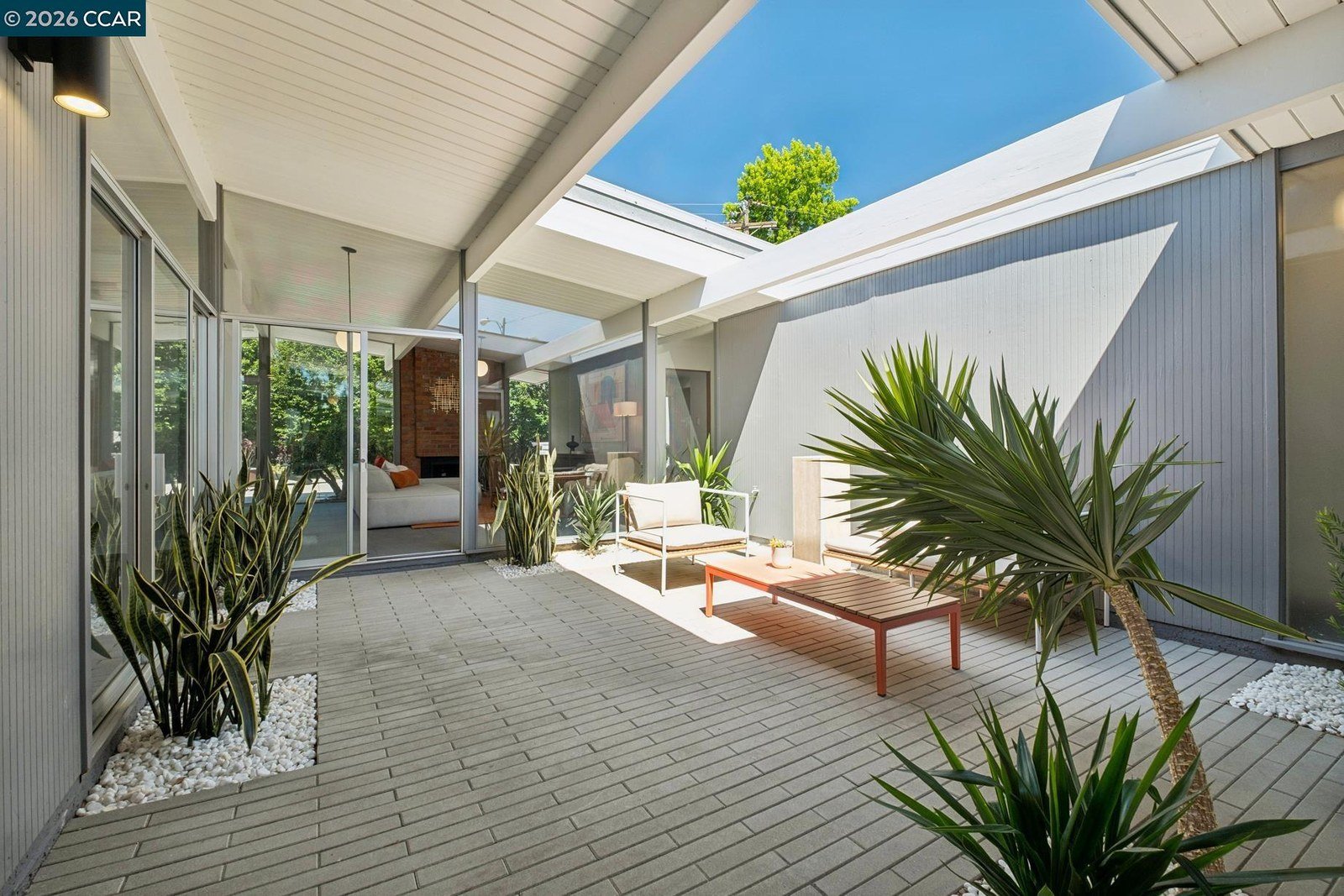
Not every East Bay Eichler has an atrium, but when one is there, it is often the heart of the plan. Keeping it open means maintaining drains, flashing and the surrounding roof. Enclosing it can add interior area, but it also changes the light and how the house is described on paper. Permits matter, and a clumsy solid roof can make the middle of the house feel smaller and darker.
I've sold open-atrium homes that still had their original character, including a Zen-garden entry at 4024 Salem Street and an intact central atrium at 3998 Salem Street. For the keep-open versus enclose decision, read Eichler Atriums: Keep Open or Enclose?.
Kitchens and Interior Updates
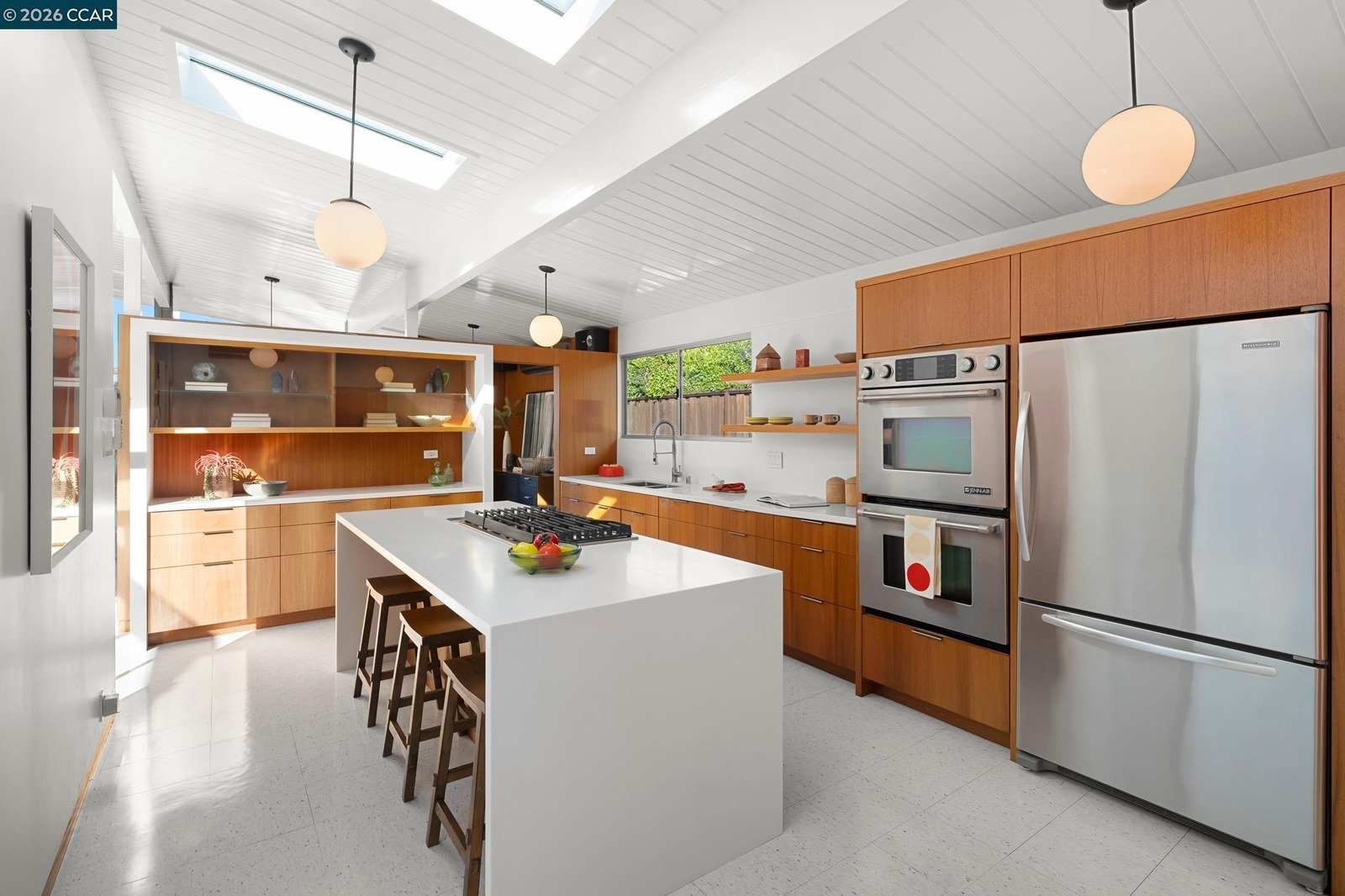
A kitchen should work with the post-and-beam structure and the light the plan already provides. Warm wood, careful storage and materials you won't want to rip out in a few years tend to photograph and live better than a generic all-white box that ignores the architecture. I wrote about that in more detail in 7 Kitchen Design Trends Shaping East Bay Homes in 2026, including how wood cabinetry can tie a kitchen back to Eichler character.
Examples from homes I've represented include Berkeley Mills mahogany cabinetry and VCT at 4095 Phoenix Street, a remodeled kitchen with original mahogany and owned solar at 2682 San Antonio Drive, a home I helped my buyers purchase, and, at 4130 Wilson Lane, a house that still had its original kitchen and bath when it sold. The point isn't that every kitchen must be original, or that every kitchen must be new. It's that the work should be honest about what's period and what's been improved.
Permits, Associations and Local Rules
Roofing, siding, atrium enclosures, additions, converted garages and electrical upgrades often need permits. Local rules are set by the city or county that has jurisdiction: the City of Concord, the City of Walnut Creek, the City of Oakland, Contra Costa County, or Alameda County for Greenridge in unincorporated Castro Valley. Ask the building department before work starts, and keep the permit history with the house.
Association review, if any, is a separate step. Sequoyah Hills has an active homeowners association that reviews exterior changes, and Oakland design review also applies there. Rancho San Miguel has a voluntary neighborhood association. Rancho de los Santos and Rancho del Diablo have no HOA. For Parkwood Estates, later Walnut Creek neighborhoods and Greenridge, confirm any association or recorded restrictions on title and disclosures rather than assuming there are none.
If You May Sell
Buyers in these neighborhoods compare plans, original details and documented improvements. A clear file — permits, roof and heat records, and an honest account of what was changed — is part of the marketing. If you're planning work with a sale in mind, start with Selling an Eichler: Prep and Pricing and a home valuation.
Eichler Renovation FAQ
What should I update first?
It depends on the house. Roofing, drainage, radiant heat, obvious repairs and a clear permit history usually matter more than a cosmetic remodel. Walk the house with the records before you spend.
Do I have to keep everything original?
No. The stronger sales I've seen tell an honest story: what's original, what's been improved and why the change works with the architecture. A thoughtful kitchen or a documented system update can help; a remodel that fights the plan can hurt.
Where can I read more about roofs, siding, atriums and kitchens?
See the guides linked above: roofs, siding, atriums and kitchens.
Do I need a permit?
Often yes, depending on the scope and on the rules in Concord, Walnut Creek, Oakland, Contra Costa County or Alameda County. Confirm with the building department, and with any association that reviews exterior work, before you start.
Let's Talk About Your Eichler
If you're planning work, or you want to know how buyers will see the house, contact me. I'm the #1 East Bay Eichler Realtor by sales volume (2026) and the #1 Concord Eichler Realtor by sales volume (2025 & 2026). I have Top 3 Concord Eichler highest solds. I live in an Eichler in Rancho San Miguel, previously served on the RSMA Board, and I'm an Eichler Network East Bay Realtor. Start with the East Bay Eichler guide or a home valuation.